


January is the perfect storm for UK hotels: occupancy rates drop by up to 16% compared to peak season, post-holiday budgets tighten, and maintenance teams finally have breathing room after the festive chaos. It's tempting to coast through this quiet period, focusing on deep cleans and routine tasks.
But here's the reality: what you overlook in January becomes your nightmare in March.
As spring shoulder season kicks in–with Easter bookings, Mother's Day breaks, and the crucial April-May recovery period–those neglected maintenance issues surface at precisely the wrong moment. Out-of-service rooms during your most profitable weeks aren't just inconvenient; they're revenue killers.
We've identified three critical areas that UK hotels consistently overlook in January–and always regret come March. Here's what's slipping through the cracks, and more importantly, how to prevent it.
1. Heating Systems & Boiler Infrastructure
After three solid months of winter operation, your heating systems aren't just tired–they're showing stress fractures you can't see yet. While most UK hotels complete their annual gas safety checks before winter, January reveals what continuous heavy-duty operation has actually done to your infrastructure.
The hidden winter damage:
Condensing boilers–which account for most modern hotel heating systems–are highly efficient but vulnerable after extended cold-weather use. Condensate pipes freeze, pressure drops become chronic, and sludge accumulates throughout the system from months of constant cycling. These issues develop gradually, so by January they're present but not yet catastrophic. By March, when you're running at 80%+ occupancy and heating demand spikes during cold spring nights, they become full-blown emergencies.

What gets missed in January:
- Boiler pressure inconsistency: Daily pressure drops indicate leaks or failing expansion vessels that worsen over time
- Uneven radiator performance: Guest rooms with cold spots harbour air locks or sludge buildup
- System efficiency degradation: Rising gas bills despite similar occupancy signals reduced system performance
- Backup boiler neglect: That secondary system you haven't needed all winter might not work when you suddenly need it
- Thermostat calibration drift: Sensors that have drifted 2-3 degrees over winter mean rooms aren't hitting guest expectations
The March reality check:
Spring weather deceives. Days are mild, but nights remain cold through April. Hotels discover their efficiency losses during the first busy weekend when occupancy climbs, heating demand returns, and guests in certain wings start complaining. Emergency boiler repairs during operations cost 2-3x scheduled maintenance rates, engineers are harder to book on weekends, and taking rooms offline during profitable periods directly impacts your bottom line.
Consider this scenario: Easter weekend arrives, occupancy hits 85%, and you discover one boiler is running at 60% efficiency while the backup won't fire up at all. Multiple rooms are cold, guests need to be moved, and you're paying triple rates for emergency Sunday callout. That weekend costs thousands in repairs plus lost revenue from disrupted bookings.
How to stay ahead:
Schedule comprehensive boiler servicing in mid-January, beyond your annual gas safety inspection. This means pressure testing the entire system, measuring actual efficiency, checking all ancillary components, and testing backup systems under load.
Balance radiators throughout the property–uneven heating now means guest complaints later. Address pressure losses, flush high-sludge systems, and calibrate thermostats.
With Snapfix's preventive maintenance scheduling, you can set up recurring January boiler checks with custom checklists that ensure every component gets inspected.
- Assign tasks to your maintenance team or external contractors
- Track completion with photo documentation
- Build a compliance history that demonstrates proper system care–crucial for insurance and warranty claims when equipment does fail.
2. Roofing, Guttering & Drainage Systems
Everyone thinks about gutters in autumn when leaves fall. But January–after three months of freeze-thaw cycles, ice dam formation, and torrential rain–is when winter reveals the real damage to your building envelope.
The winter assault on your roof:
The UK's winter weather pattern is uniquely destructive. Repeated freeze-thaw cycles cause hidden structural damage: tiles crack, flashing loosens, membranes on flat roofs develop weak spots. Debris from autumn remains trapped under winter ice, creating blockages that only become apparent when spring rains arrive in force. Ice weight stresses gutter brackets and downspouts, creating failures that aren't visible from ground level.
What's overlooked in January:
- Gutter capacity after ice damage: Winter ice creates cracks and separation points in gutter systems

- Downspout discharge points: Where water exits matters–pooling near foundations causes problems that surface months later
- Flat roof standing water: Any pooling on flat sections indicates slope or drain issues that will worsen with spring storms
- Valley and flashing vulnerability: These joints suffer most from freeze-thaw damage but show minimal visible signs until failure
- Interior roof space indicators: Damp insulation, minor staining, or musty smells in attic spaces signal water ingress before it reaches guest areas
The March disaster:
Spring brings the UK's heaviest rainfall period. Hotels discover their January-damaged drainage systems can't cope when March storms arrive. Water pools on flat roofs, overflows compromised gutters, and finds its way into walls and ceilings through winter-damaged flashing.
The scenario is familiar across the industry: gutters checked from the ground in January look clear, but March rain reveals that winter ice created multiple separation points where gutters meet downspouts. Water runs down exterior walls and into foundations. By discovery, there's structural damage and damp throughout ground floor rooms–six rooms offline for two weeks during the busiest spring fortnight.
Beyond repair costs, reputation damage compounds. Guests who encounter "damp smells," "water stains," or "mould issues" (even minor ones) leave devastating reviews that impact bookings for 6-12 months. Online reputation research shows cleanliness and maintenance complaints disproportionately affect booking conversion.
How to prevent roof disasters:
Conduct thorough roof and gutter inspections in late January using physical roof access, not ground-level observation. Clear all gutters and downspouts completely, checking for structural damage from ice weight. Inspect all flashing, valleys, and flat roof areas for winter damage. Test drainage under water load–actually run water through systems to identify failures before spring rains do it for you.
Snapfix's photo-first approach transforms roof inspections:
- Maintenance teams use their phones to photograph every gutter section, downspout, flashing point, and roof area
- Create a visual record of current conditions
- Identify issues in real-time and assign repairs immediately
- Document completion through one platform
- When you need to show your insurance company that proper maintenance was performed, you have timestamped photo evidence of every inspection
3. Deep Room Inspections & Soft Furnishing Assessment
Daily housekeeping keeps rooms presentable. Deep inspection only happens when occupancy allows. January is your window–use it or lose it.
The hidden wear from winter operation:
After months of high winter occupancy, rooms accumulate wear that daily cleaning masks but doesn't resolve. Mattresses develop issues from continuous use. Soft furnishings show pulls, stains, and general fatigue. Bathroom grout and sealant deteriorate from daily steam and moisture. Equipment develops faults. These problems exist in January but don't feel urgent because occupancy is low and natural light is dim.
What gets missed during January:
- Mattress integrity: Rotation, turning, and replacement needs after months of heavy use
- Soft furnishing deterioration: Curtains, bedspreads, throws showing wear, pulls, staining, or fading
- Upholstered furniture condition: Hidden structural damage, worn fabric, and spring issues in chairs and headboards
- Bathroom grout and sealant: Developing mould, deteriorating seals that accelerate with spring humidity
- Hidden areas: Dust buildup, wall marks, and maintenance issues behind furniture that stay hidden year-round
- Carpet deep cleaning: Winter tracking creates wear patterns requiring more than daily vacuuming
- Equipment functionality: TVs, safes, kettles, hairdryers, and irons that have developed faults but haven't been reported
The March revelation:
Spring brings longer days and brighter natural light that reveals every imperfection. Guest expectations shift seasonally–spring and summer guests are significantly more critical of room condition than winter guests. They're booking breaks, celebrations, and holidays, and they notice details.
Hotels face an impossible situation: rooms need attention but they're fully booked. The choice becomes taking profitable rooms offline for maintenance or letting guests stay in substandard conditions and accepting negative reviews. Either option hurts revenue.
John O'Grady, a hospitality professional with 30 years of experience, recalls a particularly costly incident that illustrates this perfectly: a high-profile hotel was on the verge of securing a lucrative £25,000 wedding booking when the prospective client noticed a moldy wall during their second visit.
The issue had remained unresolved for months despite being visible during the initial tour. Expecting it to be fixed by their return, the client was disappointed to find it unchanged. Unwilling to take the risk on a venue that didn't maintain proper standards, they booked their wedding elsewhere–a significant financial loss that could have been entirely avoided with systematic January maintenance.
How to prevent spring surprises:
Use January's lower occupancy for systematic deep room inspections using maintenance-focused protocols, not housekeeping checklists.
Physically inspect every room:
- Rotate and assess all mattresses
- Evaluate soft furnishing condition
- Check all electronics functionality
- Inspect bathrooms under bright lighting
- Move furniture to check hidden areas
This process, done properly across a 50-room property, takes 3-5 days but identifies every issue while you have flexibility to address them. Many hotels schedule deep cleaning teams during January, taking multiple rooms offline simultaneously without revenue impact.

Snapfix's systematic approach makes deep room inspections manageable and trackable:
- Create a custom checklist for deep inspections covering every element–mattresses, furnishings, electronics, bathrooms, hidden areas
- As your team moves through rooms, they photograph issues and create immediate work orders
- Track completion and get real-time visibility into which rooms need attention, what's been addressed, and what's still outstanding
- Nothing falls through the cracks because everything is documented and assigned
The Plaza Hotel in Dublin used Snapfix for snagging during their renovation and completed inspections for 68 bedrooms in less than 24 hours. That's the efficiency systematic photo-based inspection brings to operations.
For larger properties, use Snapfix's asset management features to maintain a complete register of mattresses, TVs, kettles, and other trackable items, recording purchase dates, warranty information, and maintenance history. When decision time comes for replacement vs. repair, you have data instead of guesswork.
The January Advantage: Prevention vs Crisis Management
The pattern holds true across UK hotels of all sizes: maintenance issues ignored in January become operational crises in March. The difference between hotels that thrive during spring shoulder season and those that struggle isn't budget, staff size, or even property age–it's maintenance strategy.
Properties using January's natural occupancy dip for systematic preventive maintenance report significantly fewer emergency repairs during peak periods and measurably better guest satisfaction scores. Those deferring maintenance "until we have time" find that time never materializes–they're perpetually reactive, managing crises rather than preventing them.
The return isn't just financial–it's operational peace of mind. No panicked Sunday emergency calls. No disappointed guests. No devastating reviews. Just smooth operations during your most profitable season.
Your January Action Plan
If you're reading this in January, you still have time. If it's already March and you're dealing with consequences, commit to using the next low-occupancy period differently.
Essential January maintenance protocol:
Weeks 1-2: Heating Systems
- Comprehensive boiler servicing beyond gas safety checks
- System pressure testing and efficiency measurements
- Radiator balancing property-wide
- Backup system testing under load
- Thermostat calibration across all zones
Weeks 2-3: Building Envelope
- Physical roof access inspection
- Complete gutter and downspout clearance
- Structural damage assessment from winter
- Drainage system water load testing
- Interior roof space inspection for moisture
Weeks 3-4: Deep Room Inspections
- Systematic room-by-room deep inspection
- Mattress assessment and rotation
- Soft furnishing condition evaluation
- Bathroom grout, sealant, and fixture inspection
- Equipment functionality testing
- Hidden area cleaning and assessment
Ongoing: Documentation & Planning
- Photograph all identified issues
- Schedule identified repairs by priority
- Plan equipment replacements based on findings
- Create maintenance budget for next year
- Build systematic inspection schedule
How Snapfix Transforms January Maintenance
Systematic maintenance management requires proper documentation, task coordination, and team communication. Paper checklists, scattered WhatsApp messages, and verbal instructions don't cut it when you're managing comprehensive property-wide inspections.
Snapfix is purpose-built for hospitality maintenance, combining simplicity with the power of a complete maintenance management system. Hotels like:
use Snapfix to stay ahead of maintenance issues year-round.
Why hotels choose Snapfix for January maintenance:

Photo-first work orders – Snap a photo, instantly create a work order. No forms, no complexity. Your entire team can report issues the moment they're spotted.
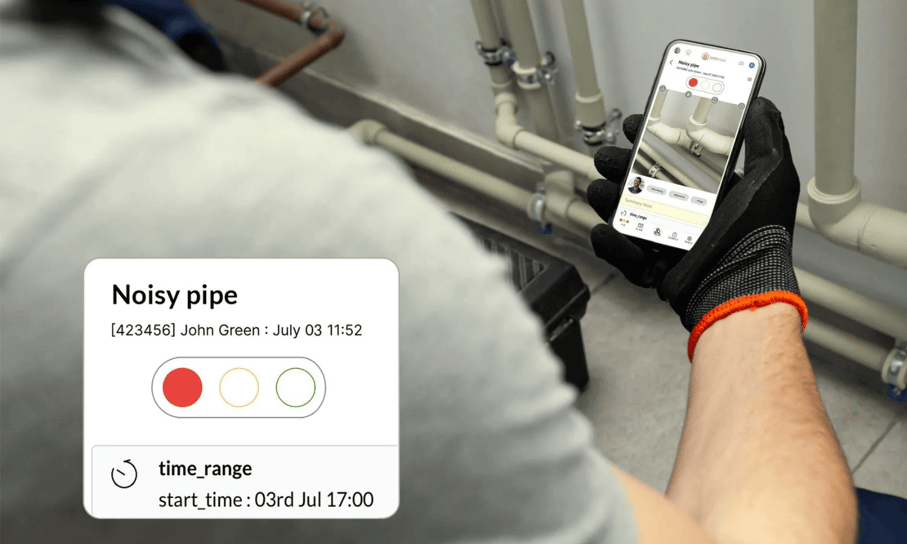
Traffic light tracking – Red (reported), yellow (in-progress), green (completed). Everyone knows exactly what's happening at a glance.
Preventive maintenance scheduling – Set up your January inspection protocol once, and Snapfix reminds your team every year with automated recurring tasks.
Custom checklists with proof – Build detailed inspection checklists for every January task. NFC smart tags on equipment provide proof your team physically inspected each location–invaluable for audit trails.
Real-time dashboard visibility – Management sees exactly what's happening across the entire property: which rooms need attention, what's been completed, what requires immediate action.
Real results from UK & Irish hotels:
The Morrison Hotel, Dublin (145-room five-star property):
- Saves 1.5 hours daily across operational teams
- Resolved 3,156 maintenance issues in six months
- Maintains 96-98% occupancy with minimal disruptions
Brocket Hall Estate (500+ acre property):
- 80% reduction in time spent on maintenance administration
- Reduced maintenance staff from 6 contractors to 3 full-time employees
- "We went from constantly playing catch-up with reactive tasks to becoming organized and staying on top of preventive maintenance."
Making This January Count
January isn't downtime–it's preparation time. The hotels earning five-star reviews and maintaining healthy profit margins don't have fewer maintenance issues. They address them proactively during natural lulls, not reactively during profitable peaks.
The question isn't whether issues will surface in March. They will. The question is whether you'll manage them proactively in January or explain them to disappointed guests in your busiest season.
Ready to transform your January maintenance?
Start your free 14-day Snapfix trial and see how hundreds of UK hotels are using January strategically to protect their spring revenue and guest satisfaction.
Or book a live demo with our team to see exactly how Snapfix can help your property stay ahead of maintenance issues year-round.