

.png?width=1140&height=684&name=90%20Days%20of%20a%20New%20Hotel%20General%20Manager%20(1).png)
Stepping into a hotel general manager role for the first time, or moving into a new property as an experienced GM, is one of the highest-pressure transitions in hospitality.
You inherit a team you haven't built, systems you didn't design, and a set of guest expectations that don't pause while you find your footing. The first 90 days of a new hotel general manager decide a lot more than they get credit for. They set the tone for how your team works with you, how owners and ownership groups judge your first year, and how quickly the property's operations start reflecting your standards instead of the last person's habits.
This guide walks through a full 30-60-90 day plan for hotel general managers, covering what to prioritize in each phase, the operational blind spots most new GMs inherit without realizing it, and how the right tools can shorten the distance between "new to the property" and "fully in control of it."
Why the First 90 Days Matter So Much in Hotel Management
New managers across every industry face the same truth: habits form fast, and trust is built or lost early. In hospitality specifically, that pressure is compounded by the pace of the operation itself. A 90-day plan gives structure to a period that would otherwise be reactive, helping a new leader move from simply absorbing information to setting direction with intention.
For a hotel GM, the stakes are higher than in most management transitions. You are not just managing a team. You are managing housekeeping turnaround, maintenance response times, front desk service recovery, guest reviews, departmental budgets, and vendor relationships, often all in the same shift. Hospitality also carries one of the highest turnover rates of any sector, with hotel staff turnover commonly running above 60 percent depending on department, according to BLS-based labor market research. A slow start on trust or visibility can cost you staff before you've even settled in.
That's exactly why a structured first 90 days as hotel general manager matters. It's not about looking busy. It's about building a foundation your team can actually rely on.
The 30-60-90 Day Plan for a New Hotel General Manager
Days 1 to 30: Listen, Observe, and Map the Property
The instinct for a lot of new GMs, especially ones brought in specifically to fix something, is to start changing things on day one. Resist it. The first month of a new hotel general manager's tenure should be almost entirely about listening and mapping, not deciding.
.png?width=948&height=569&name=new%20hotel%20gm%20snapfix%20cmms%20(1).png)
Meet every department, not just department heads. Sit down with housekeeping supervisors, maintenance engineers, front desk agents, and F&B staff, not only your direct reports. The people closest to the guest and closest to the rooms usually know exactly where the operation breaks down. They just haven't always had a GM who asked.
Shadow a full shift in every department. Walk the property during a housekeeping turnover, sit at the front desk during a busy check-in window, and follow a maintenance engineer through their ticket queue. You cannot fix what you have only read about in a handover document.
Review the last twelve months of performance data. Guest satisfaction scores, review trends, staff turnover by department, maintenance backlog, and any existing SOPs. Ask what has been tried before and why it did or didn't work. This protects you from re-proposing a fix your team already knows won't stick.
Audit your existing tech stack. Most properties are running on a patchwork of tools: a property management system, a spreadsheet for maintenance requests, a WhatsApp group for housekeeping, and a notebook at the front desk for guest requests. Map out exactly how information currently moves between departments, and where it gets lost, delayed, or duplicated. This audit becomes the backbone of everything you do in days 31 to 90.
Build relationships upward too. Understand what ownership or your regional leadership actually expects from your first 90 days. Get clarity on the budget cycle, any planned renovations, and what "success" looks like on paper, not just in conversation.
Days 30 to 60: Diagnose, Prioritize, and Align
By day 30, you should have a clear, unfiltered picture of the property. Days 31 to 60 are about turning that picture into a prioritized plan and starting to align your team around it.
Identify your two or three highest-impact problems: Not every issue you found in month one deserves equal attention. A 90-day plan works best when it focuses on the one or two priorities that will generate the biggest operational impact, rather than trying to fix everything at once. For most properties, the highest-friction points sit somewhere in housekeeping coordination, maintenance response time, or guest request handling, because these are the areas most exposed to guest-facing failure.

Share what you found, and be transparent about it: Present your early observations to your leadership team and to ownership. This is also where you start setting expectations: what you'll fix immediately, what needs a longer runway, and what needs budget approval.
Set your operating rhythm: Weekly department head meetings, a daily walk-through, a standing maintenance review, whatever fits your property. New managers often underestimate how much a predictable rhythm builds trust on its own, separate from any specific fix.
Start closing your quickest wins: Small, visible improvements in month two build credibility for the bigger changes you'll want to make in month three. This is also usually where the case for new tools or process changes becomes obvious, because you can now point to specific, recurring breakdowns rather than a vague sense that "things could run better."
Days 60 to 90: Implement, Measure, and Set the Next Quarter
The final stretch of your first 90 days as hotel GM is where you move from diagnosis to ownership.
Implement your priority fixes: Whether that's a new housekeeping workflow, a revised maintenance escalation process, or a new communication channel for guest requests, this is when changes go live, with your team already looped in from the alignment work you did in month two.
Set measurable KPIs for the next quarter: Room turnaround time, maintenance ticket resolution time, guest response time, staff retention by department. Pick metrics your team can actually see move week to week, not just numbers that show up in a quarterly report.
Build a simple scorecard you review regularly: This keeps the operation honest and gives your team a shared reference point for what "good" looks like at your property specifically.
Present your 90-day summary: To ownership, to your regional leadership, or simply to your own team: one improved process with measurable impact, a delegation plan for what you'll stop doing personally, and clear priorities for the next quarter. This is the moment a new manager moves from proving themselves to leading with authority, because the results are now visible rather than promised.
The Operational Blind Spots Every New Hotel GM Inherits
Almost every new GM discovers the same category of problem in their first month, even at well-run properties: information that should move automatically instead moves through people.
A late checkout gets relayed by radio instead of updating a room board. A guest request gets passed verbally from the front desk instead of routed directly. A maintenance fault gets logged on paper and sits in a queue longer than anyone realizes.
None of this shows up clearly in a handover document. You usually only see it once you're shadowing shifts and asking your team to walk you through how something actually gets done, not how it's supposed to get done on paper.
This is where a lot of new GMs quietly lose weeks of their first 90 days: chasing down why a task fell through, or why housekeeping and the front desk had two different versions of which rooms were ready.
Fixing this doesn't require a system overhaul. It requires closing the specific gaps where information stalls between departments, and that's exactly the kind of fix that's realistic to implement inside a first 90-day window.
Snapfix is built around solving that exact problem for hotel operations, particularly the handoffs between housekeeping, maintenance, and the front desk that tend to break down first under a new GM's watch.
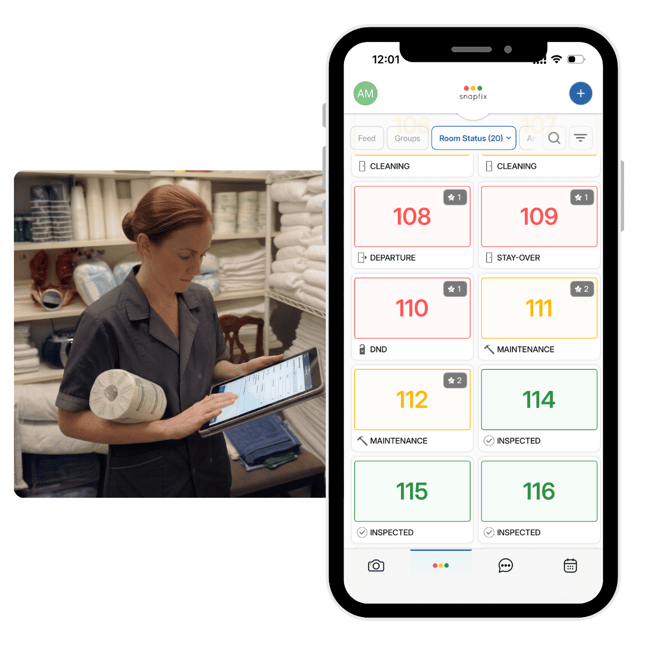
- Snapfix Rooms: gives every department a live, real-time view of room and task status, so priorities update automatically the moment a DND drops, a VIP arrives early, or a room needs attention, instead of relying on a printed board or a radio call. This kind of real-time coordination matters most exactly when a new GM needs it, during high-pressure, high-turnover periods on the property.
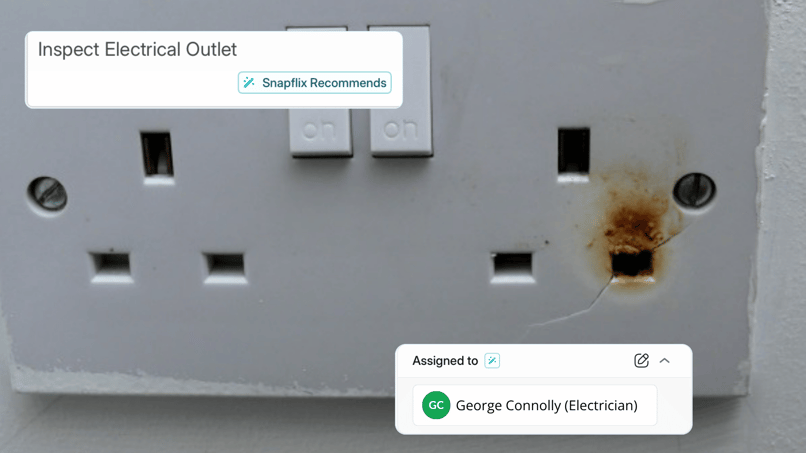
- AI-powered task creation: lets any team member snap a photo of a maintenance issue, and the system reads the image, generates an accurate task title, categorizes it, and routes it directly to the right engineer with the room number attached, closing the exact gap between spotting a problem and logging it properly that new GMs so often find in month one.
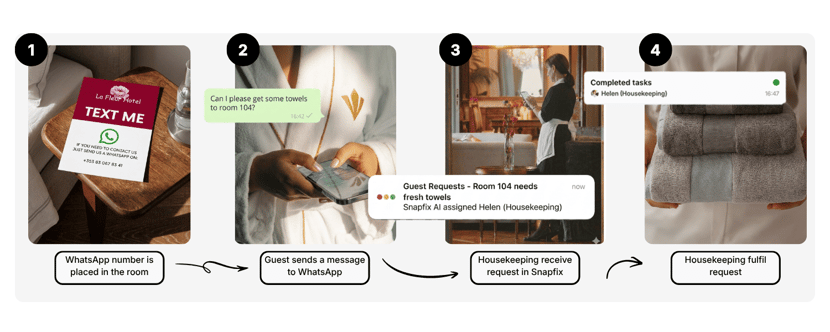
- Snapfix Guest Comms: converts incoming guest messages directly into operational tasks routed to the right team, removing the front desk as a manual go-between and cutting down the time it takes to act on a guest request.
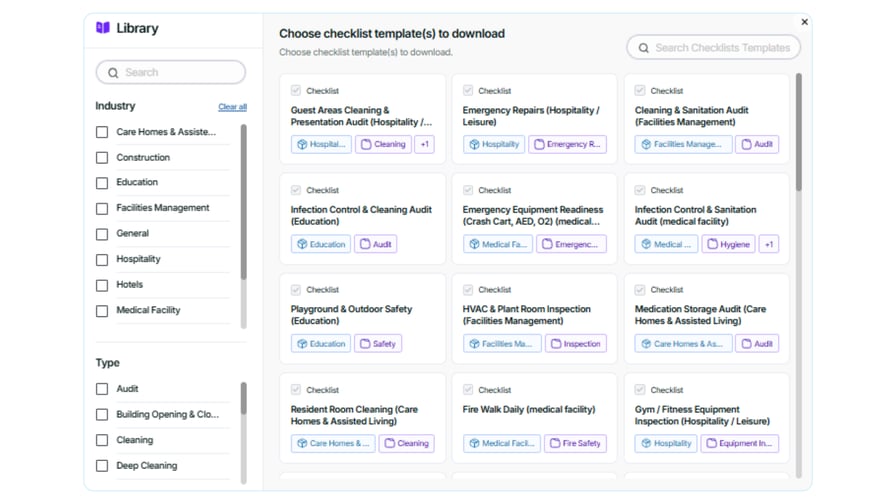
- AI-generated checklists: built from real operational data across thousands of hotel properties, give a new GM an instant, tested standard to hand new and existing staff, rather than relying on informal handovers or tribal knowledge that varies shift to shift. This is especially useful in your first 90 days, when you're trying to establish a consistent standard without yet having built the institutional trust to enforce one from scratch.
Also Read: How AI Is Changing the Way Hotels Work (And Why That's Good News for the People Running Them)
For a new GM, the appeal isn't the technology itself. It's what it gives you in the first 90 days: visibility across every department from day one, a documented view of where things are actually breaking down, and a way to demonstrate an early, measurable win without waiting until month three to show results.
A Simple First 90 Days Checklist for New Hotel General Managers
Days 1 to 30
- Meet every department, not just department heads
- Shadow a full shift in housekeeping, front desk, maintenance, and F&B
- Review twelve months of performance and guest feedback data
- Audit your current tech stack and how information moves between teams
- Clarify expectations with ownership or regional leadership
Days 31 to 60
- Identify your two or three highest-impact operational problems
- Present early findings transparently to leadership and your team
- Set a predictable operating rhythm: meetings, walk-throughs, reviews
- Close your first visible quick wins
Days 61 to 90
- Implement your priority fixes with your team already aligned
- Set measurable KPIs for the next quarter
- Build a simple, recurring scorecard
- Present your 90-day summary and next-quarter priorities
Where This Goes After 90 Days
The first 90 days of a new hotel general manager aren't about proving you're the smartest person in the building. They're about proving you can be trusted with the operation, one visible, well-communicated decision at a time.
A GM who spends the first month genuinely listening, the second month prioritizing honestly, and the third month executing on something measurable earns a different kind of authority than one who tries to change everything in week one.
The tools you choose to run the property matter here too. A GM walking into a property still coordinating housekeeping over radio, logging maintenance on paper, and relaying guest requests by hand is fighting an uphill battle before they've even finished their first walk-through.
Closing that gap early, with real-time visibility across housekeeping, maintenance, and guest communications, gives a new GM something rare in a first 90-day plan: an early win the whole team can see and feel immediately.
If your first 90 days include fixing this exact kind of operational blind spot, book a demo or start a free trial with Snapfix to see how it fits into your property.
Frequently Asked Questions - New Hotel Manager Guide
What should a new hotel general manager do in the first 30 days?
Focus almost entirely on listening and mapping the property: meet every department, shadow shifts across housekeeping, front desk, maintenance, and F&B, review the last twelve months of performance data, and audit the tools and communication channels currently in use. Avoid making major changes in this window. The goal is understanding, not action.
How long does it typically take a new hotel GM to feel fully in control of a property?
Most structured 90-day plans are designed to get a new GM from observation to measurable, visible impact by the end of month three. Full operational fluency, especially around budget cycles, seasonal patterns, and staff dynamics, usually takes closer to six months to a full year, but a strong first 90 days sets the trajectory for how quickly that happens.
What are the biggest mistakes new hotel general managers make in their first 90 days?
The most common mistakes are moving too fast on changes before understanding why current processes exist, focusing only on direct reports instead of frontline staff, and underestimating how much operational friction is hiding in manual handoffs between departments like housekeeping, maintenance, and the front desk.
How does a new hotel GM identify the biggest operational problems quickly?
Shadowing actual shifts rather than relying on handover documents is the fastest way to see where a property breaks down. Pay close attention to how information travels between departments: a late checkout, a guest request, or a maintenance fault. The gaps in that handoff usually point directly to the highest-impact fixes.
What tools help a new hotel general manager get visibility across departments faster?
Hotel operations software that gives real-time visibility into housekeeping status, routes guest requests and maintenance issues automatically, and centralizes checklists and SOPs can significantly shorten the time it takes a new GM to understand and control the operation. Platforms like Snapfix are built specifically around closing these cross-department visibility gaps for hotel teams.