


.png?width=1043&height=626&name=hotel%20maintenance%20snapfix%20cmms%20(1).png)
Ask any hotel manager how last peak season went and you'll get the same answer: exhausting. The rooms were full, the reviews were decent, and the team held it together – just. But it shouldn't have to feel that way every time.
Peak season doesn't create problems. It reveals them. The maintenance queue that's manageable in February becomes unmanageable in July. The guest request that gets handled in three steps suddenly takes seven. The systems that were just-about-fine at half capacity quietly collapse at full.
What separates teams that thrive in peak season from those that merely survive it isn't how hard they work. It's how well their tools work around them. And for small hotel teams, there's now a more practical answer to that than most operators realise.
Why Peak Season Is an Operations Problem, Not Just a Staffing Problem
When occupancy spikes, the instinct is to look at headcount. But adding staff to an operation running on outdated information and manual coordination does not close the gap. It just adds more people to the same bottleneck.
Seasonal hiring is expensive, slow, and inconsistent in quality. And yet it remains the default response to peak season pressure because the alternative, fixing the underlying operational setup, feels harder.
It does not have to be.
The numbers behind the burnout pattern are worth understanding clearly:
- • 69% of shift workers in hospitality say their schedules change without warning
- • 98% report working overtime, most of the time without adequate notice
- • Hotels face an average annual turnover rate of 105%, the highest of any sector
- • 64% of managers have seen employees leave specifically because of burnout
Teams do not burn out from the work itself. They burn out from the waste around it: from being asked to move faster inside a system designed to slow them down, from chasing information that should have reached them automatically, from covering for gaps that better coordination would have prevented.
That is an operations problem. And operations problems have operational solutions.
AI in Hotel Operations: What the Shift Actually Looks Like
82% of hotels expect to expand their use of AI in the next 12 months – and this isn't a story about big chains with big budgets. It's a sign that the technology has become practical enough for operations of every size.
The operators seeing real results aren't chasing AI for its own sake. They're identifying where friction is costing them time and fixing those specific points. That distinction matters more than it sounds.
Because AI that actually works for a small hotel team doesn't look like a system overhaul. It looks like a housekeeper snapping a photo instead of filling in a form. A room board that updates itself when a late checkout comes through. A guest request that becomes a task without anyone at the front desk needing to relay it.
No single change is dramatic. But small fixes at the right pressure points make the whole operation more resilient, and that's exactly what you need when the pressure is highest.
What AI-Powered Hotel Operations Software Actually Does During Peak Season
Housekeeping Scheduling That Updates in Real Time
The printed room board reflects what was true at the start of the shift, not what is happening now. When a late checkout comes in, or a room gets pulled for maintenance, that information travels by radio call, group chat, or a tap on the shoulder. By the time it reaches the right person, time has already been lost.
Snapfix Rooms gives every department a live room and task status the moment something changes. Priorities update automatically when a DND drops, a VIP arrives early, or a room goes offline. Attendants always know which room to go to next.
Supervisors get visibility across the full operation without walking every floor. Nothing falls through the cracks. The shift keeps moving.
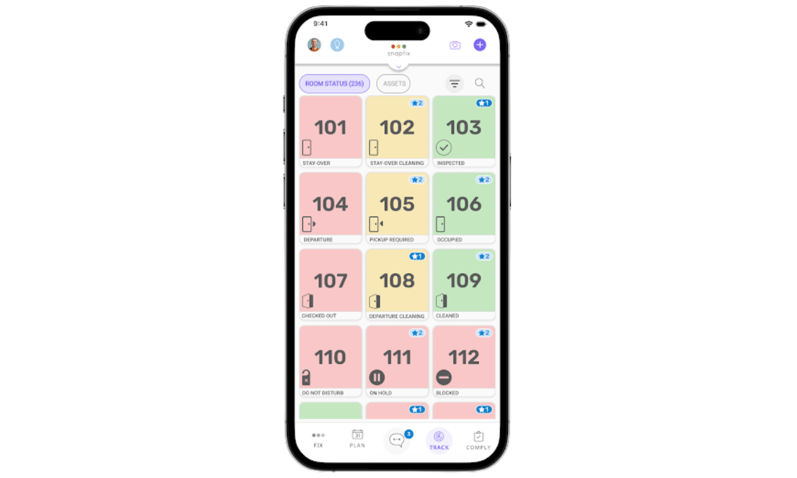
When room turnaround time directly affects how your front desk manages arrivals, that kind of real-time visibility is not a nice-to-have. It is what keeps the lobby running smoothly.
AI Task Creation from a Photo
The gap between spotting a problem and logging it properly is where faults go unreported and maintenance issues sit in a queue longer than they should. For a team member working quickly through a packed shift, that gap is easy to fall into.
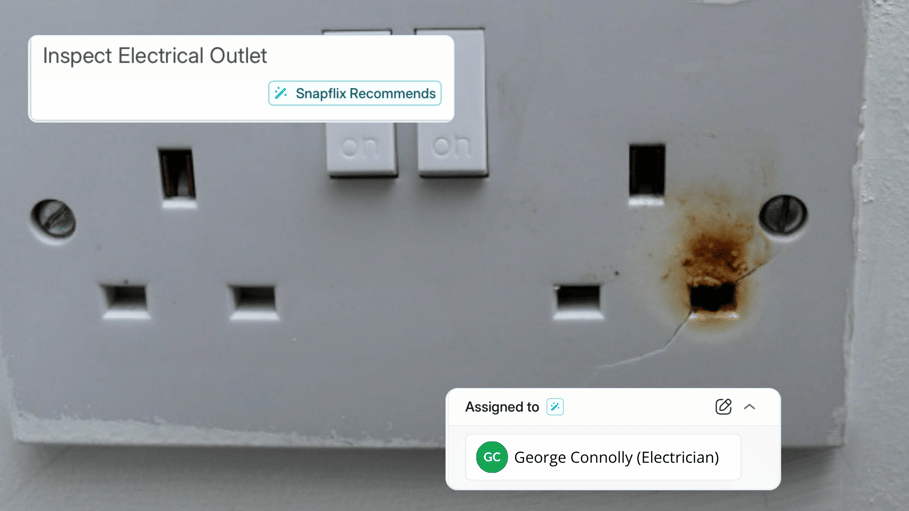
With Snapfix's AI-powered task creation, a team member takes a photo of the issue. From there, the system takes over:
- • Reads the image and identifies what the problem is
- • Generates an accurate task title and categorises it correctly
- • Routes it directly to the right person with the photo and room number attached
- • Sends an instant mobile notification so the engineer can act immediately
No form filling. No translation barrier. No delay between seeing the problem and getting it to the person who can fix it. During peak season, that speed directly affects whether a guest notices a fault at all.
Guest Requests That Go Straight to the Right Team
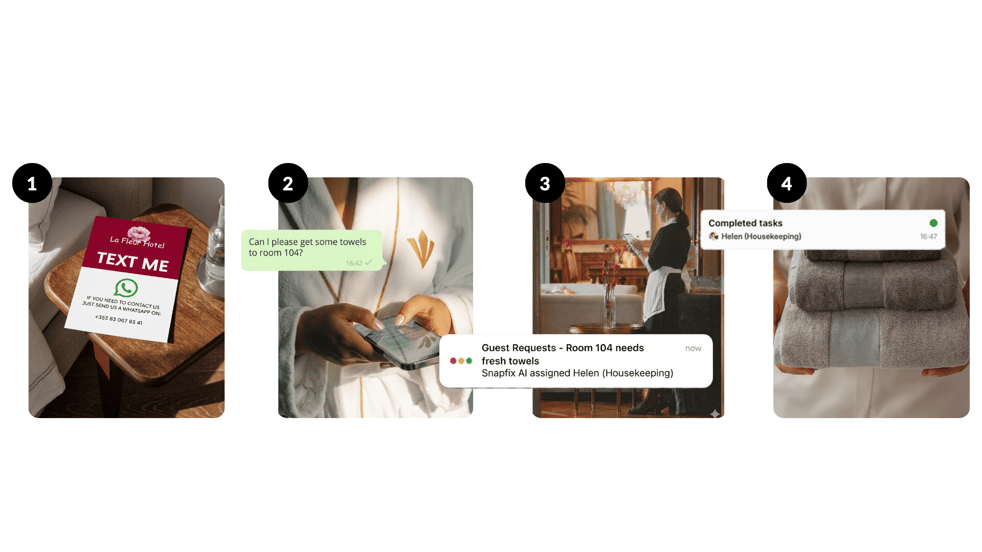
Guest messaging volume spikes during busy periods and the traditional relay, front desk reads the message, passes it on verbally, someone acts on it eventually, does not scale. During a full shift, that relay happens dozens of times and each one carries a small risk of something being missed or delayed.
Snapfix Guest Comms converts incoming guest messages directly into operational tasks, routed to the right team without the front desk acting as the go-between.
Research consistently shows that response time is one of the things guests notice and remember most. When requests are handled in seconds rather than minutes, that shows in the quality of the stay and in the review that follows.
The front desk team, meanwhile, is free to focus on the people standing in front of them.
AI-Generated Checklists Built from Real Operational Data
Consistency is hard to maintain across peak season, especially when new team members are joining mid-season and experienced staff are too stretched to mentor anyone properly. What does a thorough pre-arrival room check actually involve? What standard is your property working to?
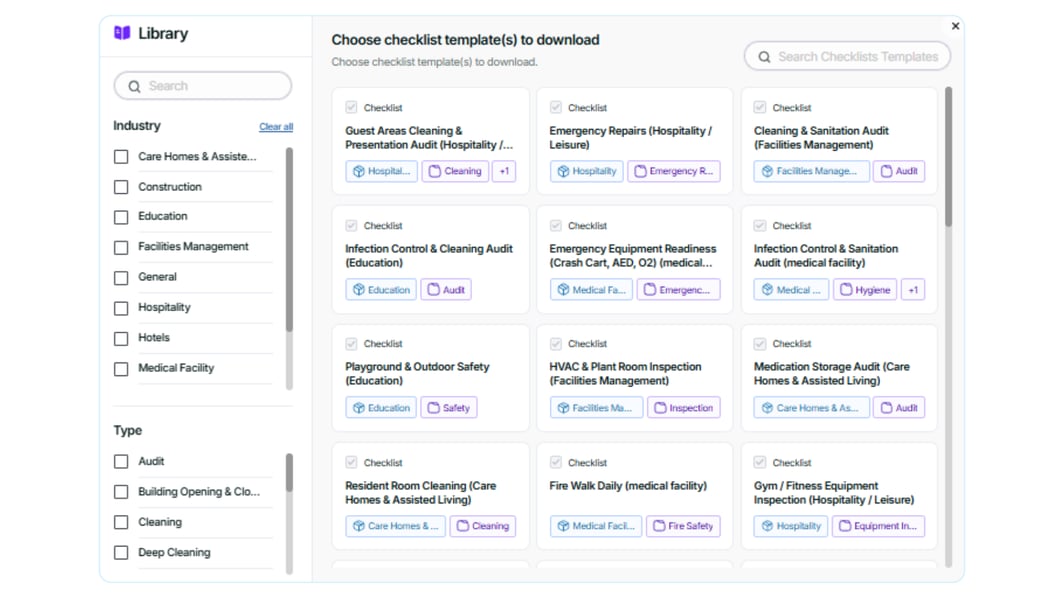
Snapfix's AI-generated checklist library gives your team a shared, practical framework built from real operational data across thousands of hotel properties. New starters are not learning from scratch or relying on an informal handover at the start of a shift. They have a tested structure they can follow from day one. That matters most in peak season, when the gap between a consistent operation and an inconsistent one shows up directly in guest feedback.
IoT Integrations That Surface Problems Before Guests Do
Under the traditional model, a maintenance fault surfaces as a guest complaint. The complaint goes into a review, or at best gets managed on the back foot at the front desk. The hotel is always responding to the consequence rather than the problem itself.
With IoT integrations, Snapfix can receive signals from connected systems across your property and create maintenance tasks automatically before anything affects the guest. A WiFi fault in a room, a temperature anomaly, a signal from a connected asset: each one becomes a task assigned to the right engineer, resolved before checkout. The guest experience stays seamless. The team handles it without drama.
During peak season, when every room is occupied and every complaint carries more weight, the shift from reactive to proactive maintenance is one of the highest-value changes a small hotel operation can make.
What Peak Season Can Look Like With the Right Systems in Place
The properties that get through peak season intact are not the ones with the most staff. They are the ones where every department is working from the same accurate information, issues get logged and resolved without friction, and the team on the ground has the tools to do the job properly.
Snapfix is built for the people in the corridors, not the people in the boardroom. Every decision about what to build starts with the same question: Does this make life easier for the person on the ground? The AI in the platform exists to remove specific barriers, not add new ones.
Applied to the right problems, that makes a real difference during peak season:
- • Rooms turn faster because scheduling updates in real time
- • Faults get resolved before guests notice, through proactive IoT alerts
- • Guest requests are handled without delay, with no manual relay at the front desk
- • New team members reach full productivity quickly, using AI-generated best-practice checklists
- • Existing staff are supported properly, rather than stretched further
Peak season does not have to feel like survival mode. Book a demo or start a free trial today with Snapfix and see how it works for your team.