


Most guest complaints are not about the problem itself. They are about how long it took to fix it. A simple request that should have taken seconds to resolve turns into an hour-long wait, not because the team did not care, but because the message never reached the right person in the first place.
AI is changing that. Hotels that have adopted AI-powered guest messaging are not just responding faster, they are running with fewer dropped requests, fewer missed handoffs, and fewer of the small failures that quietly shape how a guest feels about their stay. And because it all sits within their existing operations platform, the team does not have to change how they work to see the difference.
This post looks at why the communication gap exists in the first place, what AI-powered guest messaging actually does at the operational level, and why the hotels already using it are seeing fewer surprises across every shift.
Why Hotel Guest Communication Breaks Down at Scale
Front desk teams are managing more channels than ever: incoming calls, walk-up guests, internal radios, WhatsApp messages, emails, and verbal handoffs from the previous shift. None of these are connected. Each one is a separate thread that someone has to actively pick up and action.
When a guest message goes unanswered for an hour, it is rarely because the team does not care. It is because the message arrived on a channel nobody was actively watching, or it was passed along verbally and lost somewhere in the handoff.
According to the Hotel Guest Tech Report, 70% of guests find automated messaging helpful for routine requests – the kind of queries that should take seconds to resolve but routinely take much longer because of how most hotels are set up to handle them.
The real cost of unmanaged guest communication is not just the time it wastes. It is the requests that never get actioned, the guests who stop asking and just check out quietly with a review that reflects the silence more than the service.
How AI Hotel Guest Messaging Works in Practice
Each guest room has a QR code on the desk, or guests receive a WhatsApp contact number at check-in. Either way, guests message directly from wherever they are, using a channel they already know.
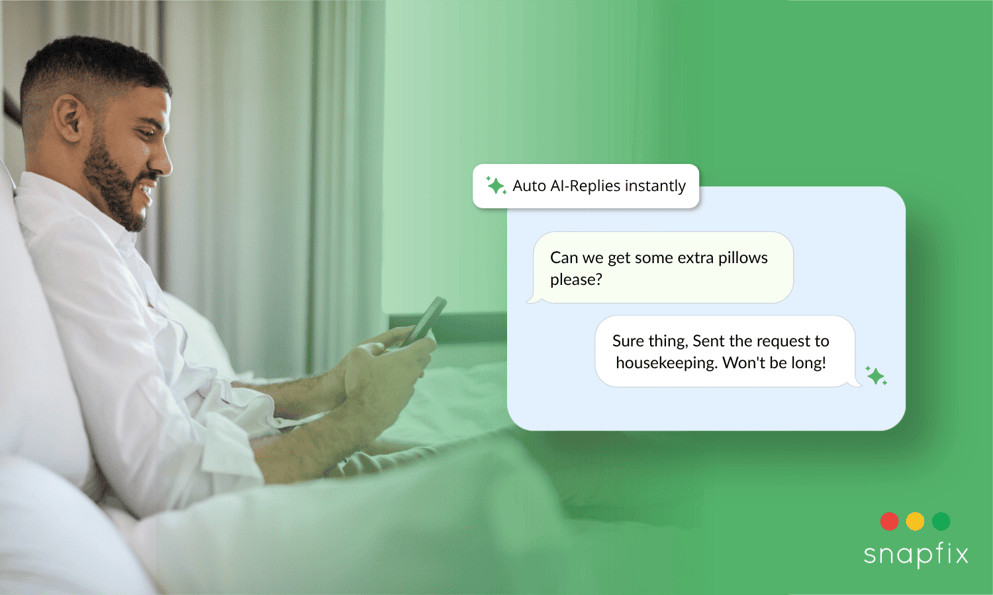
When a guest asks something like "What time does the gym close tonight?" or "Can someone bring extra pillows to Room 214?", here is what happens:
For informational queries, the AI responds instantly and accurately. Questions about hotel facilities, local area recommendations, check-out processes, parking, and dining options are handled automatically, in the guest's language, without any staff involvement.
Research across hotel AI implementations in 2025-2026 shows that over 80% of all guest queries fall into this category and require no human input at all.
And in hotels where AI is handling that volume, satisfaction scores on automated responses are reaching 95%, higher than manually handled replies in direct comparisons.
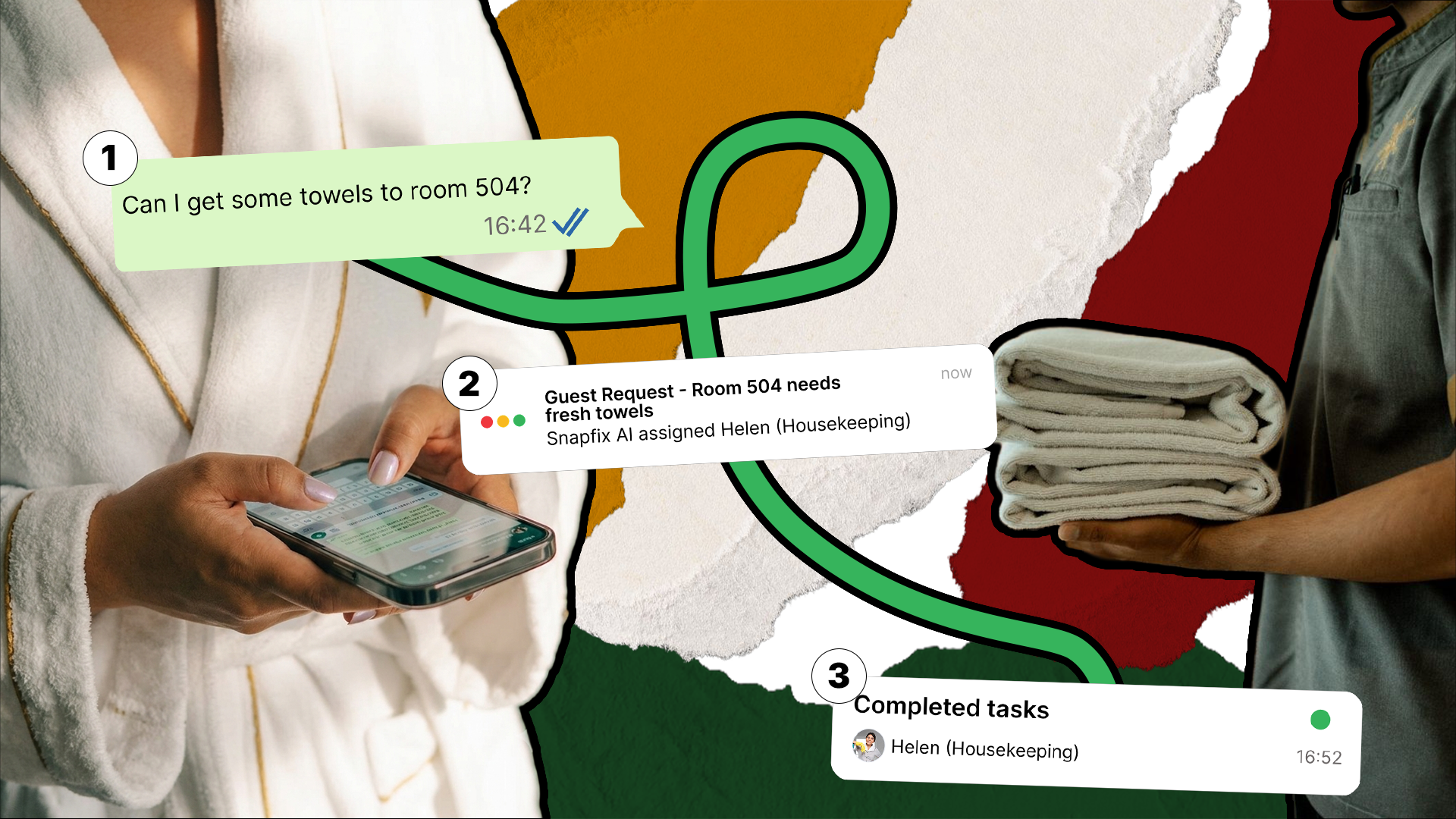
For operational requests, the message does more than generate a reply. It automatically creates a task in the hotel's operations platform, assigned to the relevant team, with all the context needed to act on it.
The request for extra pillows is not sitting in a chat thread waiting for someone to notice it. It is a live, assigned, trackable task. No phone call required. No radio message. No risk of it being forgotten between shifts.
For anything unusual or sensitive, the system flags it for a team member to handle directly. Staff attention is reserved for situations that genuinely need a human response.
From the guest's side, they sent a message and received a fast, accurate reply. From the operations side, the request is logged, assigned, and either resolved or in progress.
The two sides of that interaction are fully connected in one system, which is exactly where the operational value sits.
Hotels juggling WhatsApp on one device, a maintenance log on a separate platform, and housekeeping updates somewhere else entirely are creating the gaps that lead to missed requests and reactive management.
Consolidating guest messaging within the same platform used for daily operations removes that fragmentation and gives managers real-time visibility into what has been requested, what is in progress, and what has been completed, without walking the floor to find out.
Why This Reduces Surprises, Not Just Workload
Operational surprises in hotels follow a pattern. A request was made but not logged. A message was received but not seen. A task was verbally handed off but never formally assigned. By the time anyone notices, the guest has already formed an opinion.
Automated guest messaging removes those gaps systematically. Every message is captured. Every operational request becomes a task. Every task has an owner and a status. Nothing exists only in someone's memory or on a Post-it note at the front desk.
Routine guest requests do not need a human in the loop every time. The hotels that have accepted that are the ones running fewer surprises, shorter response times, and front desk teams that are actually free to do the work that needs them.
The question is whether your current setup can deliver it reliably, across every shift, every day.
How Snapfix Centralises Hotel Guest Communications and Operations
Snapfix gives hotel teams one place to manage housekeeping, maintenance, inspections, and task management. Guest Communications brings messaging into the same system, so the full operational picture sits in one place rather than across multiple tools.
A guest messages on WhatsApp. The AI handles it instantly if it is informational. If it requires action, a task is created and assigned automatically within Snapfix. If it needs a team member to respond directly, it is visible in Snapfix Chat without switching to another app. The guest gets a timely, accurate reply. The team has full visibility of every request and its status, in the same platform they are already using.
No additional tools. No new channels to monitor. No disconnect between what a guest requested and what the operations team knows about.
Ready to See Snapfix in Action?
Book a demo or start a free trial and see how hotel teams are managing operations with fewer missed requests and faster response times.

.png)