
The hospitality landscape is undergoing its most dramatic transformation in decades.
As we move into 2026, hotels, resorts, and hospitality venues face a perfect storm of opportunity: guests demanding hyper-personalized experiences, artificial intelligence reshaping operations, and wellness becoming non-negotiable.
Properties that adapt will thrive–those that don't risk being left behind.
If you're a hotel manager, operations director, or hospitality professional, understanding these trends isn't just about staying relevant–it's about gaining a competitive edge.
Let's dive into the forces reshaping hospitality in 2026 and, most importantly, how you can leverage them to delight guests while streamlining your operations.
Trend #1: The Rise of the “Whycation”
Travel in 2026 isn't about "where"–it's about "why."
According to Hilton's 2026 Trends Report, which surveyed over 14,000 travelers across 14 countries, guests are increasingly choosing trips based on emotional motivations: the desire to rest, reconnect, and find meaning.
This "whycation" trend reveals powerful insights:
- Nearly half of travelers are carving out solo time even during family vacations
- 54% admit they'd take a business trip just to get a break
- 61% of travelers won't drive more than five hours without stopping at a hotel
- 90% say comfortable beds are the most important amenity
- 83% prioritize free breakfast
What this means: Guests are willing to pay premium prices for properties that understand their emotional needs. But delivering on these expectations requires flawless execution. When a guest books a quiet room and the HVAC system breaks at 2 AM, operational failures destroy the very experience they paid for.
Trend #2: AI-Powered Personalization
Personalization has graduated from "nice to have" to "must have." Research from PwC shows that AI is making hyper-personalization scalable and cost-effective for the first time in hospitality history.
Here's what's changing:
Attribute-based selling is revolutionizing bookings. Rather than generic room categories, guests can now select specific features–high floor, balcony, blackout curtains, proximity to breakfast. PhocusWire reports this approach builds loyalty by letting guests customize their stay down to the smallest detail.
AI predicts what guests want before they ask. From suggesting local experiences based on past behavior to adjusting room temperature before arrival, AI-driven systems are creating seamless, intuitive stays.
Dynamic pricing powered by predictive analytics is delivering 10-20% profitability increases, according to data from Deloitte.
The operational challenge: Personalization falls apart when your maintenance team doesn't know that the VIP guest in Room 305 requested a pilates reformer machine–or when the equipment arrives but isn't working. The disconnect between guest promises and operational execution is where brands lose reviews, loyalty, and revenue.
Also Read: Hotel Budgeting 2026: Do's, Don'ts & the New Forecast Outlook
Trend #3: Wellness Travel
The Global Wellness Institute projects wellness travel will reach $1.3 trillion by 2025, growing faster than any other sector. But 2026 wellness goes far beyond spa services.
Properties are now offering:
- Holistic wellness journeys including fitness programs, meditation, nutritional consultations, and personalized sleep protocols
- Sleep-focused environments with high-tech mattresses, blackout drapes, soundproofing, pillow menus, and aromatherapy
- Experiential wellness like beachside yoga, Reiki sessions, and private sound baths
- Enhanced health protocols including improved air filtration, touchless systems, and elevated sanitation standards

ABC's hospitality trends analysis highlights that properties near nature, clean air, or quiet landscapes have distinct advantages as wellness destinations.
The reality: Wellness amenities are maintenance-intensive. When your meditation room's sound system malfunctions or gym equipment breaks down, you're losing the wellness-focused guests willing to pay premium rates.
Trend #4: Bleisure & Hybrid Work Travel
The boundaries between business and leisure travel continue blurring. Properties must now cater to guests who are working remotely while on vacation or extending business trips for personal time.
Essential infrastructure includes:
- Community workstations with reliable high-speed internet
- Private conference rooms and cubicles
- Quiet zones designed for deep work
- Flexible check-in/check-out times
Corporate retreats, conferences, and conventions are driving demand for these hybrid spaces. But here's the catch: business travelers have zero tolerance for technical failures. A dropped video call due to poor WiFi, a non-functional projector in your conference room, or a broken printer can cost you corporate accounts worth thousands annually.
Also Read: Oxsana Hospitality Selects Snapfix as Preferred Maintenance and Operations Platform for Its Members
Trend #5: Authentic Sustainability
Today's guests don't just want eco-friendly–they want authentically sustainable practices tied to local culture.
This means:
- Sourcing local ingredients for hotel restaurants
- Supporting local artisans and communities
- Implementing visible sustainability initiatives
- Reducing single-use plastics
- Energy-efficient systems with transparent reporting
EHL Insights notes that innovation, personalization, and sustainability are the three pillars driving hospitality in 2026.
The connection to operations: Energy-efficient HVAC systems only save money when properly maintained. Solar panels need regular cleaning. Water conservation systems need monitoring. Sustainable operations and preventative maintenance are intrinsically linked.
Trend #6: Integrated Technology
The era of fragmented systems is ending. PhocusWire identifies "overcoming fragmented systems" as a critical challenge for 2026.
Guests expect seamless experiences–mobile check-in, digital room keys, instant service requests–but delivering this requires breaking down operational silos.
Leading hotels are implementing:
- Mobile check-in and digital keys
- Automated room upgrades
- QR code-based service requests
- Centralized communication platforms
- Integration between PMS, maintenance, and guest services
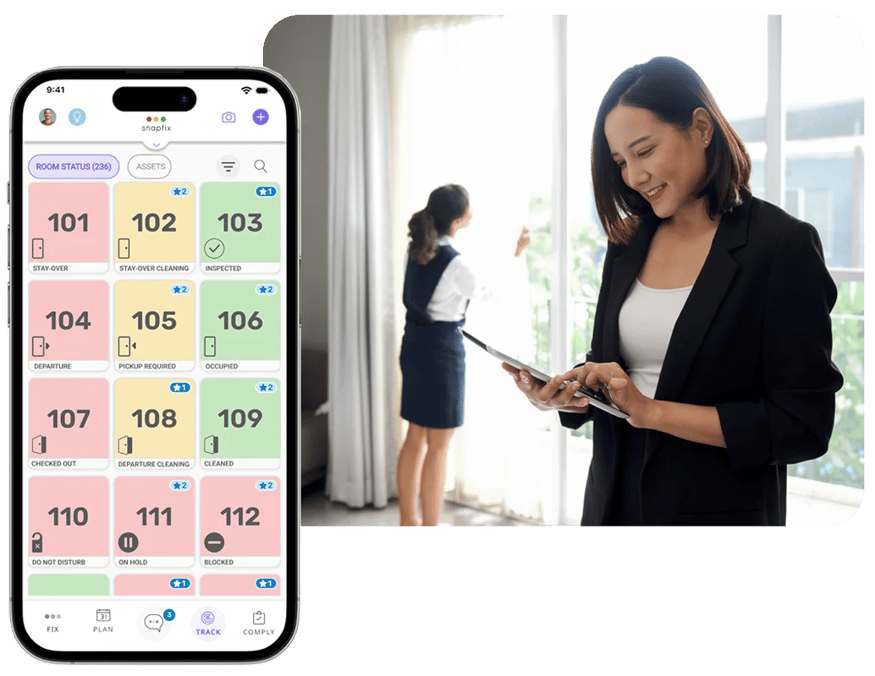
Why this matters: When your front desk promises a room is ready but maintenance hasn't cleared it, or when a guest reports a broken AC through your shiny new app but the message never reaches engineering–technology becomes a liability instead of an asset.
Trend #7: High-Occupancy & Peak Demand
Whether it's conference season, holiday peaks, or major sporting events drawing crowds to your region, high-occupancy periods represent both your biggest revenue opportunity and your greatest operational risk.
Why these periods are make-or-break:
- Zero room buffer - When equipment fails, you can't simply move guests to another room
- Maximum exposure - More guests means exponentially more reviews, social media posts, and word-of-mouth
- Cascading failures - One malfunctioning HVAC system can trigger a domino effect of complaints and compensation requests
- Revenue concentration - A single weekend during peak season can represent 5-10% of your annual revenue
Properties that can predict demand patterns, adjust pricing dynamically, and maintain flawless service standards during peak times capture disproportionate revenue. But here's the reality: when every room is booked, operational excellence shifts from "nice to have" to "business critical."
The Hidden Challenge Behind Every Trend
Here's the uncomfortable truth: all these trends create higher guest expectations and more complex operations. Every personalized amenity, every wellness offering, every technology touchpoint represents something that can go wrong.
Consider this scenario: A wellness-focused guest has paid premium rates for the sleep-focused room with a special mattress, the morning yoga session, and the meditation room. But:
- Housekeeping reports the mattress has a tear
- The yoga instructor calls in sick with no backup
- The sound system in the meditation room stopped working
- The air filtration system is making strange noises
Every operational failure doesn't just create maintenance work–it destroys the guest experience you promised and paid to market. In 2026, the gap between what hotels promise and what they deliver will define success or failure.
How Snapfix Helps Hotels Deliver on 2026's Promises
At Snapfix, we bridge the gap between guest expectations and operational reality with solutions designed for modern hospitality.
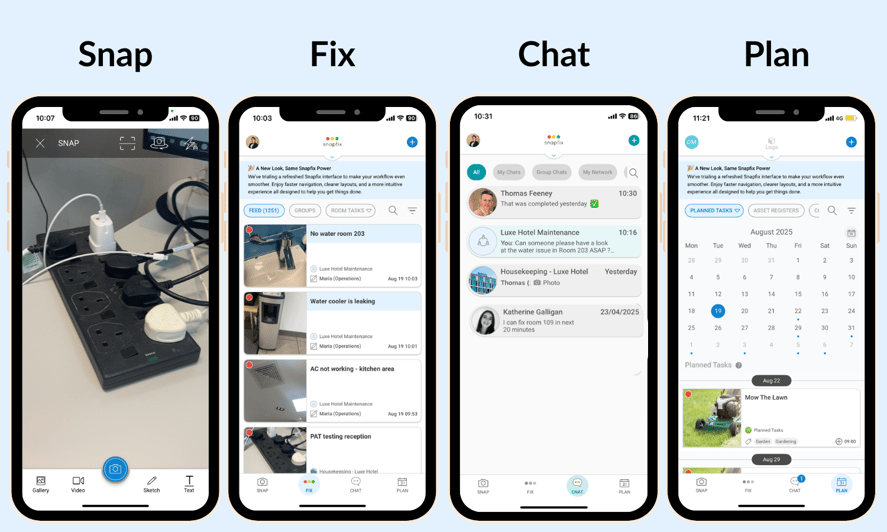
Photo-First Issue Reporting
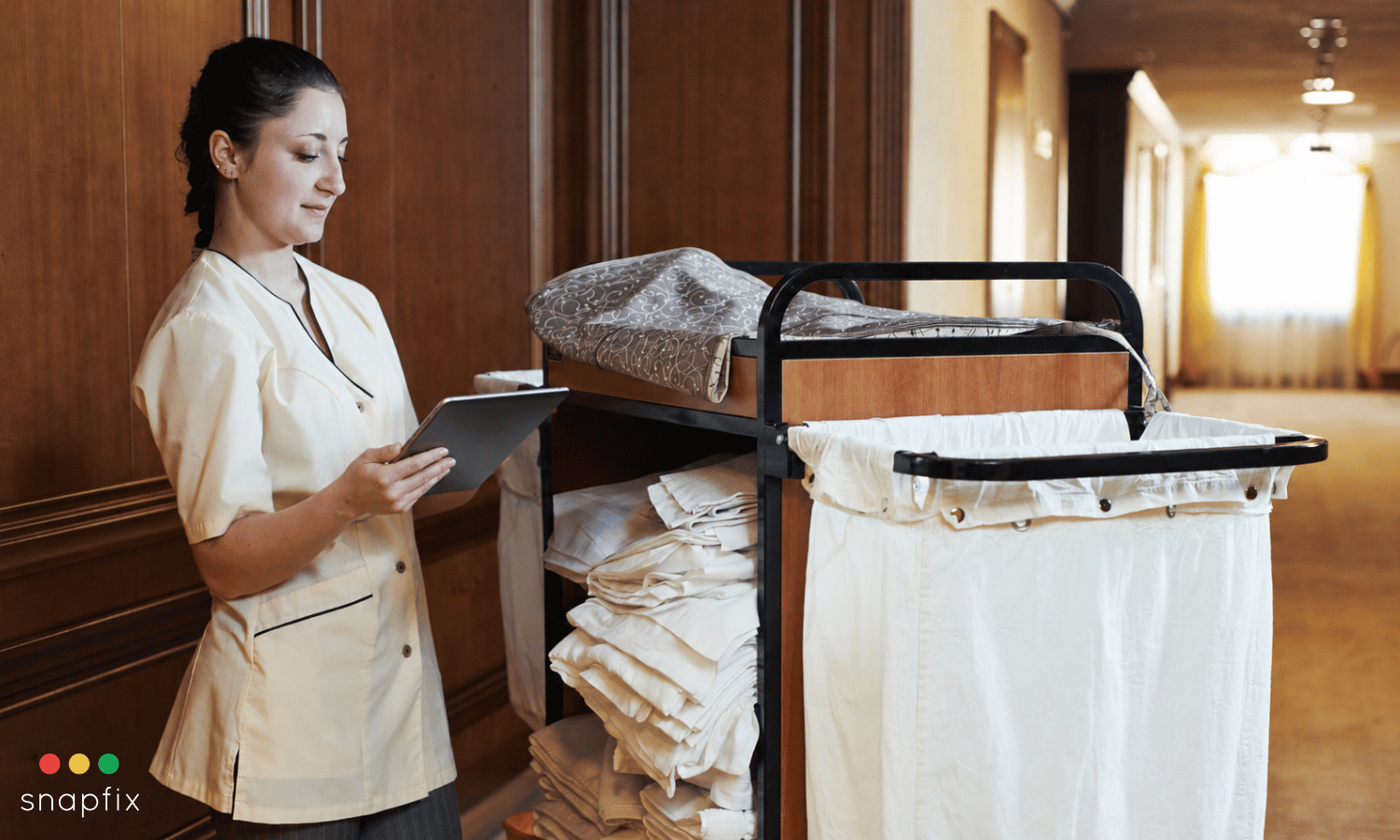
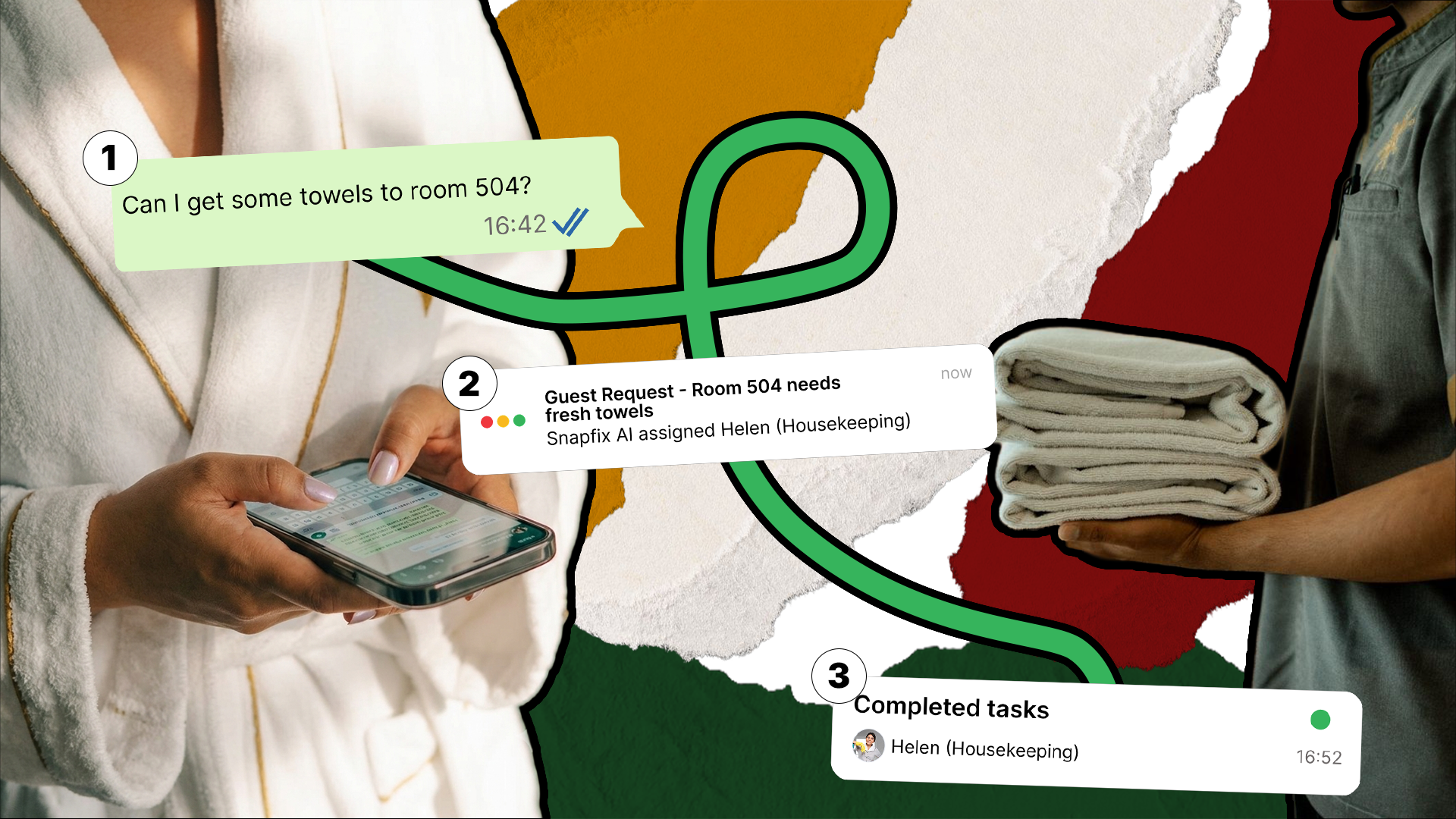
Create work orders in 3 seconds using photos, videos, or QR codes. When housekeeping spots issues or guests report problems, everything is instantly documented and actionable–no lost sticky notes or vague descriptions.
Snapfix Rooms: Real-Time Status & PMS Integration
Get instant visibility into every room through direct PMS integration with Oracle Opera Cloud, Guestline, Cloudbeds, and more. See live status (Dirty, Clean, Inspected, Occupied), set VIP priority flags, and eliminate communication delays between housekeeping, maintenance, and front desk.
Smart Preventative Maintenance
Schedule and track maintenance for all critical systems with custom checklists and automated reminders. One hour of planned maintenance prevents three hours of reactive repairs and guest complaints.
Complete Asset & Compliance Management
Track every asset's history, warranties, and repairs. Digitize fire safety checks and audits with photos, scores, and signatures. Stay audit-ready with complete compliance documentation.
Analytics & Insights
Identify recurring issues, monitor team efficiency, and spot patterns before they become problems. Make data-driven decisions about equipment replacement.
Real Results from Real Hotels
Over 700 hotels in 40+ countries use Snapfix to streamline maintenance operations, reduce response times, and deliver flawless experiences that their guests expect. Properties using Snapfix consistently report:
- 15% productivity improvements through streamlined workflows
- 10% cost reductions by preventing emergency repairs
- 20% fewer negative reviews related to maintenance issues
- 1.5 hours saved per staff member every single day
Get Started Today
If your team can take a photo, they can use Snapfix. Snapfix is cloud-based, works on any smartphone, tablet, or desktop, and requires zero complex installation. Your team will be up and running the same day–not weeks or months from now.
See It in Action
Book a 15-minute personalized demo to see how photo-first maintenance management helps hotels stay ahead of issues instead of constantly reacting to them.
Or join our next live webinar (Wednesday, December 11th at 3 PM GMT / 11 AM EDT) for a 30-minute walkthrough of how leading properties are using modern CMMS to tackle these 2026 challenges.

.png)