

There's a lot of noise right now about AI in hospitality.
Most of it is aimed at large hotel groups with dedicated tech teams, enterprise budgets, and the runway to run a six-month pilot before anyone touches the floor. If you run a boutique property, it can feel like the conversation is happening without you.
It shouldn't be. Because here's what the industry keeps getting backwards: boutique and independent hotels aren't at a disadvantage when it comes to AI housekeeping. They're often better placed to adopt it, move faster, and actually feel the difference on the ground, shift by shift.
Here's why.
The Boutique Hotel Housekeeping Problem No One Is Solving Fast Enough
You don't need a report to tell you what a bad morning looks like. You're in it.
One housekeeper calls in sick and the whole schedule is in jeopardy. A late checkout comes through and nobody automatically gets told. A maintenance issue gets spotted in a guest room, logged somewhere, and doesn't reach the right person until it's already caused a complaint. Your supervisor is spending half their shift chasing information instead of managing their team.
Annual hospitality staff turnover now tops 70% in many markets. In 2025, 65% of hotels reported active housekeeping staffing shortages, and labour costs rose 11.2% year over year. For a 300-room chain, that's a resourcing challenge. For a 30-room boutique, it's an operational crisis waiting to happen.
The difference is that large hotel groups have buffers: dedicated HR, central training, and enough brand cushioning to absorb a difficult review week. Independent properties don't have those cushions. What you have is a small, close-knit team, a reputation built review by review, and margins that leave very little room for the kind of daily friction that adds up fast.
That friction, not the lack of effort, is what drives complaints, comp nights, and staff burnout. And it's exactly what modern hotel housekeeping management software is built to remove.
What AI Hotel Housekeeping Software Actually Does on the Ground
Not robots. Not replacing your team. Not a platform that needs three weeks of onboarding and an IT consultant to configure.
AI housekeeping tools connect your live PMS data to your team's phones, so every room attendant, supervisor, and front desk agent is working from the same picture in real time, not from a list printed at 7am that's already wrong by 8:15.
Research from NYU SPS and Boston Consulting Group published in March 2026 found that AI-synchronised housekeeping schedules are already delivering 20% faster room turnaround times across early-adopting hotels.
For a boutique hotel, 20% faster turnaround means:
- Rooms ready before guests start queuing at the front desk
- Your team finishing their section without running over into overtime
- Fewer comp nights, fewer apology upgrades, and fewer lobby waits that end up in a review
- Supervisors spending time on quality and team support, not firefighting
The EHL Hospitality Insights Outlook Report 2026 put it plainly: AI agents are autonomous systems that act and adapt in real time, handling tasks from room allocation to housekeeping optimisation and saving hours of manual work while improving accuracy. Your people still do the work. AI makes sure they're always doing the right work, in the right order, with an accurate picture in front of them.
Why Boutique Hotels Adopt AI Operations Tools Faster Than Chains
Here's the part the industry rarely says out loud.
Boutique and independent hotels move faster than large chains, not despite their size, but because of it:
- Fewer legacy systems to work around
- Shorter decision chains from GM to go-live
- A manager who is present on the floor every day and can see results directly
- A feedback loop that's measured in shifts, not quarters
When the scheduling tool updates a priority, and the team responds well, you see it in that shift. When something isn't working, you know by the end of the day. Chains don't have that.
There's also a guest experience argument that matters specifically for boutique properties. Guests choose boutique hotels because they want something different. They want to feel looked after, noticed, genuinely cared for. That experience is delivered by your team, but your team can only deliver it when they're not buried in coordination gaps, unclear priorities, and information that's already out of date.
Getting the operational foundation right is what gives your team the space to do what they're actually there for.
How Snapfix Removes Housekeeping Friction in Boutique Hotels
At Snapfix, we've spent years building operations software for the people who actually keep hotels running. Housekeepers. Maintenance engineers. Floor supervisors. We're not building for the boardroom. We're building for the corridor.
When we started adding AI to what we do, we asked one question: what is actually getting in the way of your team doing their jobs well today?
The answer, across every hotel we work with, is the same. It's not effort. It's friction. The small, daily accumulation of admin, miscommunication, and reactive workarounds that slow everything down. Here's what removing that looks like.
Real-Time AI Housekeeping Scheduling That Adapts Automatically
The printed room board is one of the most persistent problems in hotel operations. It's accurate at 7am. By 8:15 it's already out of date.
Snapfix Housekeeping uses AI scheduling that updates the moment something changes:
- A late checkout comes through and the schedule adjusts automatically
- A VIP arrival moves up, and the relevant room goes to the top of the queue
- A team member finishes ahead of schedule, and the next assignment is already on their phone
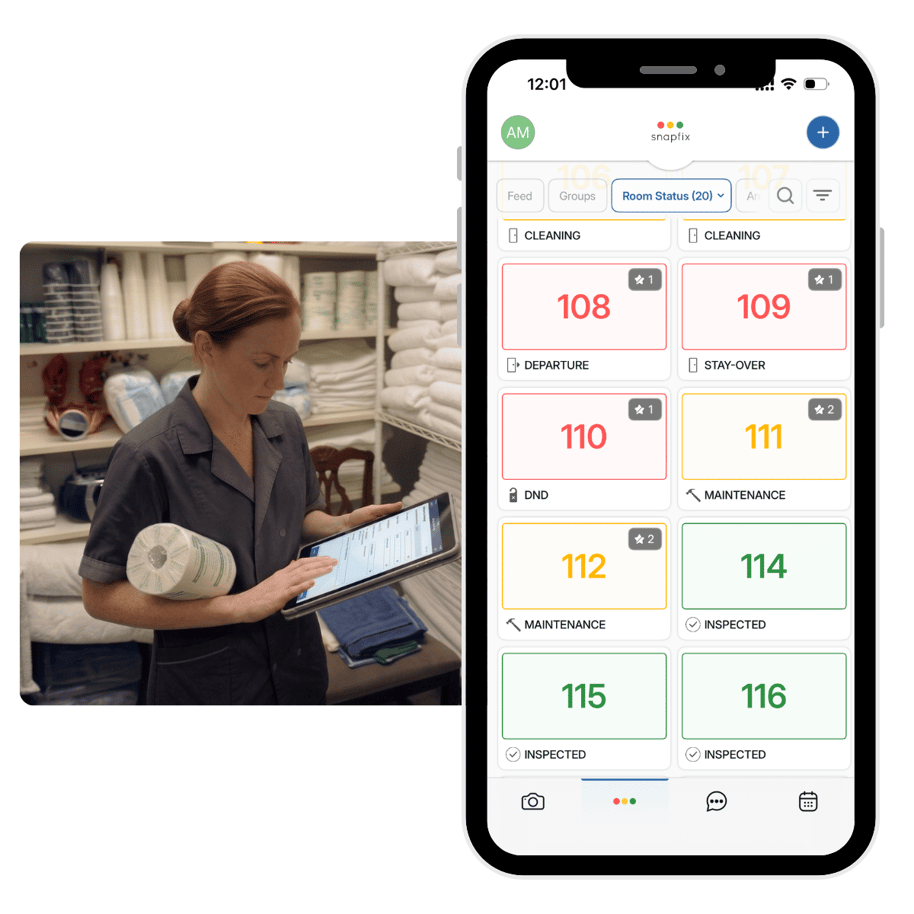
No radio calls to chase. No supervisor manually reordering a whiteboard. No attendant standing in a corridor waiting to be told what's next. For a deeper look at how real-time room visibility works in practice, the Snapfix Rooms feature gives every department the same live picture of room status across the property.
Automated Maintenance Task Creation from a Single Photo
A housekeeper spots a faulty socket in a guest room. Under a traditional workflow, she needs to write it up, find the right person, make sure the language is clear enough to act on, and follow up if nothing happens. If English isn't her first language, every step in that chain is harder.
With Snapfix, she takes a photo.
The AI identifies the issue, titles the task, categorises it, and routes it to the right maintenance engineer automatically. They get a notification with the photo, the room number, and enough context to act immediately.
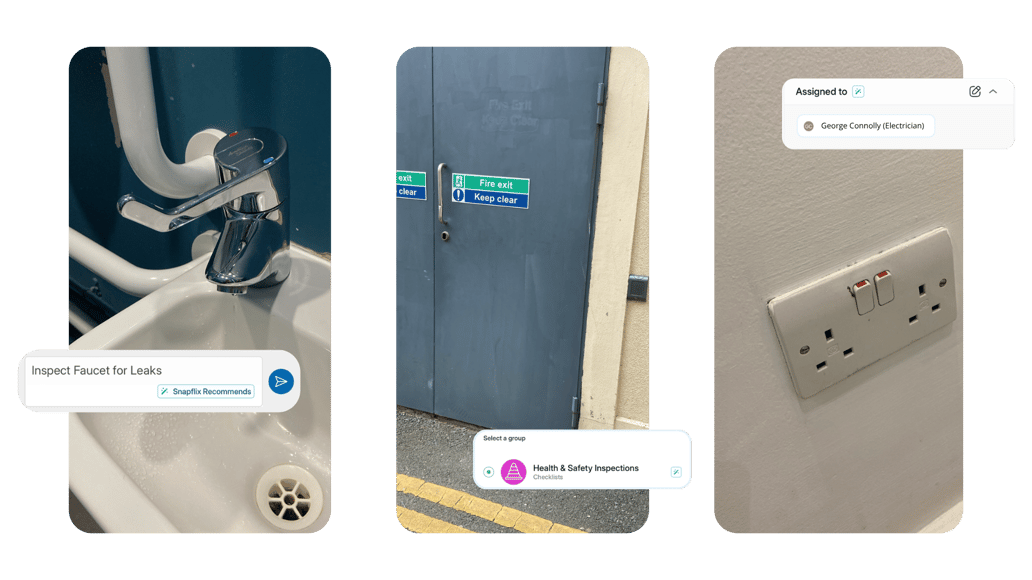
The fault gets resolved before the guest knows it existed.
AI-Generated Housekeeping Checklists Built from Real Hotel Data
Consistency is hard to maintain when turnover is high and training time is limited. The standard a housekeeper has built up over two years doesn't transfer automatically to someone who started on Monday.
Snapfix has built an AI-generated checklist library trained on operational data from thousands of hotel teams. When a new team member starts, they have a best-practice framework from day one. The standard doesn't walk out the door when an experienced attendant leaves. It stays in the system.
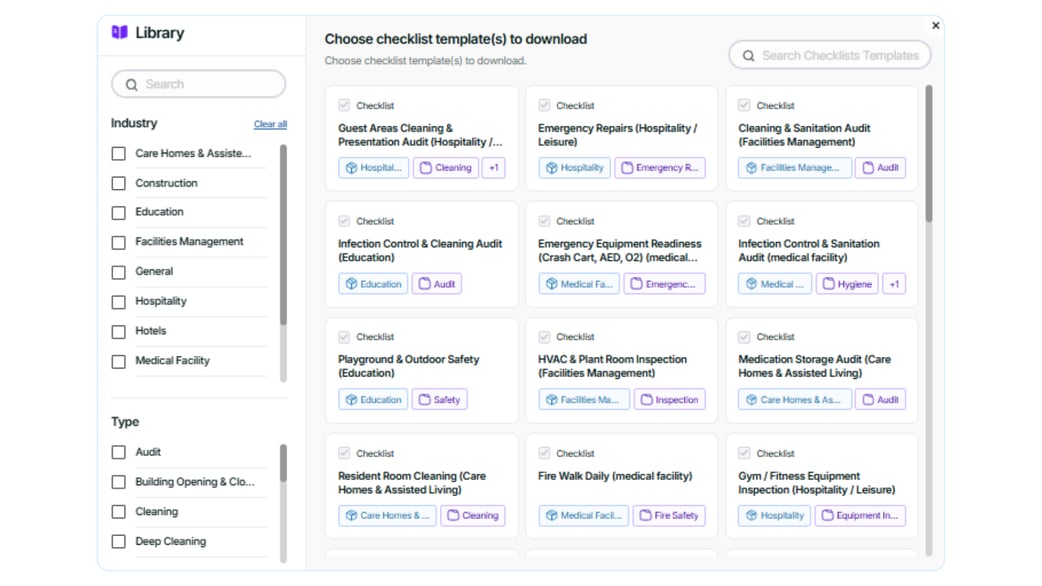
For a boutique property where one long-serving team member can carry a significant amount of institutional knowledge, this matters more than most people realise until it's too late.
Our ultimate hotel housekeeping checklist for 2026 covers exactly what a best-practice framework looks like room by room.
Guest Request Management That Creates Tasks Without Anyone in the Middle
A guest sends a WhatsApp message asking for extra towels. Under the old model, that message lands somewhere, gets read by someone, gets relayed to someone else, gets logged, gets acted on. Every step is a delay. Every delay is a potential complaint.
With Snapfix Guest Comms, that message automatically creates a task and notifies the right team member. No manual relay. No message buried in a group chat.
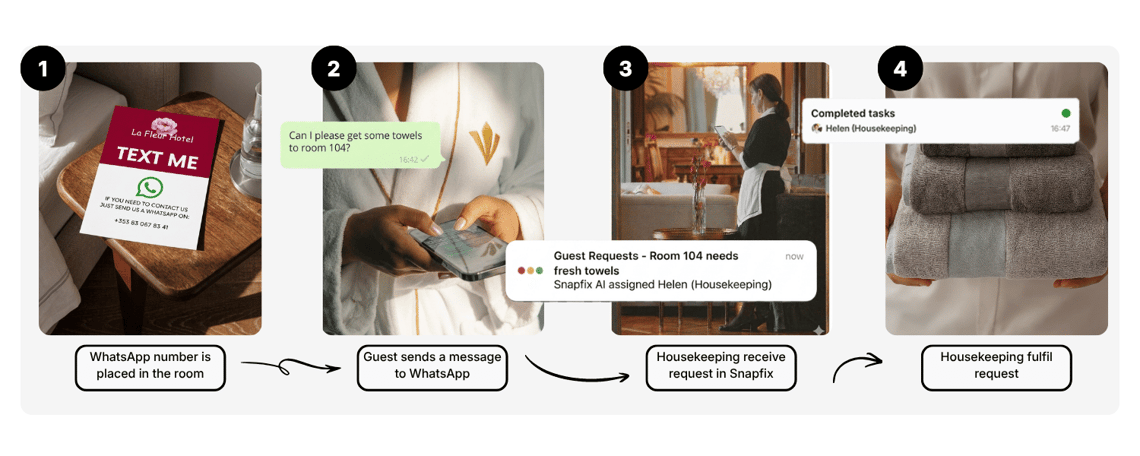
Response time is consistently one of the top factors in guest satisfaction scores. When requests get resolved in minutes, guests notice in exactly the right way. Your front desk team, meanwhile, gets to focus on arrivals and face-to-face moments rather than fielding internal communications.
What Guests Experience When Hotel Housekeeping Runs Well
Guests don't see the operations behind their stay. They see the results of them.
They notice whether their room was ready when they arrived. Whether the issue they mentioned quietly got resolved before dinner. Whether the team seemed focused and calm, or stretched and distracted.
Cleanliness and room readiness are among the top two cited reasons for negative reviews on every major OTA. For boutique properties where a handful of reviews can move the average score, the relationship between operational consistency and reputation isn't abstract. It's a direct line to revenue. There's a reason RevPAR improvement starts on the floor, not in the boardroom.
As 2026 has confirmed across the sector, this is the first year AI tools have moved from aspirational to genuinely accessible for independent operators.
Boutique hotels that move now, with tools built for their scale, will be in a meaningfully stronger position as guest expectations continue to rise and the staffing environment continues to demand smarter ways of working.
The best hotel experiences feel effortless. Behind every effortless experience is a team that was supported well, given clear priorities, and freed from the friction that gets in the way.
That's what AI housekeeping management, applied properly, gives a boutique hotel. Not a replacement for the people who make it special. The operational foundation that lets them do their jobs properly.
Try the AI Housekeeping Software Built for Hotel Teams
Snapfix is already trusted by over 600 hotels to manage rooms, maintenance, and guest requests in one place. If you're ready to see what AI-powered housekeeping looks like on the ground, here's how to get started.
Book a free 30-minute demo and see AI scheduling, live room status, automated task creation, and guest communications running in real time.
Or start a free trial today and get your team up and running in 15 minutes.