


The difference between hotels that fail fire inspections and those that pass with zero violations isn't budget or property age, its systems. Properties with documented protocols breeze through inspections while their competitors scramble to fix oversights discovered too late.
The challenge? Fire safety failures rarely stem from dramatic equipment malfunctions. They're mundane maintenance gaps that accumulate over time: a blocked exit during renovation season, a forgotten extinguisher inspection, outdated signage after a remodel. Small oversights that become significant violations.
Here's what inspectors flag most often, and the practical protocols that eliminate these gaps before they become problems.
1. Blocked or Locked Emergency Exit Routes
The Violation: Emergency exits obstructed by storage, furniture, or equipment, or exit doors that don't open freely from the inside.
Why It Happens So Often
Emergency exits become storage catch-alls during renovations, seasonal inventory changes, or high-occupancy periods. A housekeeper props a door open for convenience. Maintenance stacks supplies "temporarily" in a stairwell. Within weeks, your emergency egress system has become a liability.
Under Article 14 of the Regulatory Reform (Fire Safety) Order 2005, emergency routes and exits must lead as directly as possible to a place of safety and remain completely unobstructed.
Exit routes must maintain a minimum clear width of at least 750mm (though 1,050mm is recommended for buildings accommodating wheelchair users, and 1,200mm for new buildings or extensions). Any reduction, any obstruction, any locked door that requires a key to exit-these are immediate violations that inspectors cite on sight.
The Real Cost
Under the current Fire Safety Order, breaches can result in unlimited fines in both Magistrates' and Crown Courts. The responsible person (typically the hotel owner or manager) is prosecuted as an individual, not just the company.
Beyond fines, serious violations often result in immediate closure orders until corrections are made–resulting in complete loss of revenue, insurance premium increases, and significant reputational damage that can affect bookings for months or years.
How to Prevent It
Create a daily exit route verification protocol. Assign specific staff members to walk every exit path at the beginning of each shift, using a mobile checklist that captures photos and timestamps. When exits are part of someone's specific daily responsibility–not just general awareness–they stay clear.

Modern maintenance platforms like Snapfix allow you to set up recurring inspection tasks that automatically assign to rotating staff members, ensuring no shift misses the check. Geo-tagged photos provide instant verification, and any obstruction triggers an immediate work order.
Set up physical barriers or painted floor markings that clearly delineate "no storage zones" within 10 feet of any exit door or throughout exit corridors. Make the rule visual and impossible to ignore.
Quick Action Checklist:
- Map every emergency exit and stairwell in your property
- Schedule daily exit route inspections with photo verification
- Install "Keep Clear" signage at every potential obstruction point
- Make exit route compliance part of shift handoff procedures–when it's someone's specific responsibility, it gets done
- Conduct monthly management walkthroughs to verify system effectiveness
2. Non-Functional or Expired Fire Extinguishers
The Violation: Fire extinguishers that are expired, uncharged, blocked, missing inspection tags, or absent from required locations.
The Inspection Reality
Fire safety inspectors don't just glance at extinguishers–they check every single one. They verify inspection tags, test accessibility, confirm proper mounting height, and ensure clear signage. A single expired tag in a 200-room hotel can trigger a comprehensive property-wide citation.
UK regulations require annual professional servicing by a competent person. The inspection tag must show services within the past 12 months. Extinguishers must be easily visible, unobstructed, and mounted with handles between 1 metre (for units over 4kg) and 1.5 metres (for units 4 kg or less) from the floor.
Updated guidance from 2023 includes new recommendations for positioning extinguishers correctly, including considerations for lithium-ion battery fires–an increasingly important concern for hotels. Additionally, as of 4 July 2025, AFFF extinguishers containing PFOA are banned in the UK, requiring replacement with environmentally friendly alternatives like fluorine-free foam or water mist extinguishers.
Why Hotels Fail This Consistently
Tracking dozens or hundreds of extinguishers manually is nearly impossible. Maintenance teams forget which units were serviced when. Annual inspections get scheduled but not documented properly. New extinguishers get installed without updating the master list.
The Hidden Danger
Beyond fines (which can reach thousands of pounds per violation under the Regulatory Reform (Fire Safety) Order 2005), non-functional fire extinguishers represent your first line of defence failures. Small containable fires become major incidents when staff reach for equipment that doesn't work.
How to Prevent It
Step 1: Create a Digital Inventory
Stop tracking extinguishers on spreadsheets or clipboards. Every unit needs a unique identifier, location tag, installation date, and maintenance history in one system. Set up automatic reminders 30 days before any inspection is due so nothing slips through the cracks.
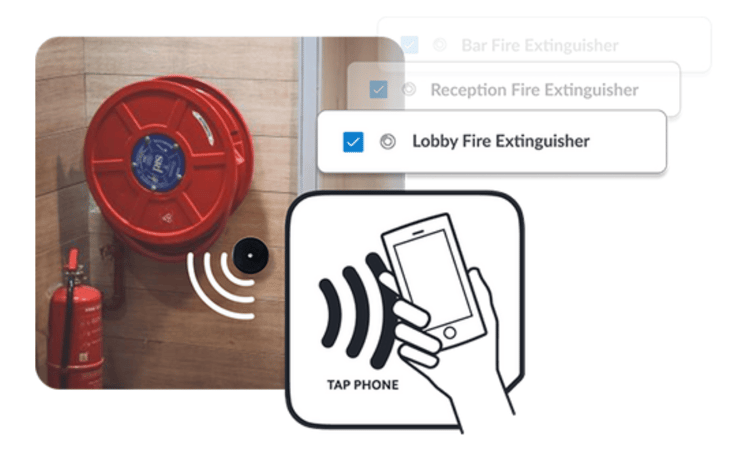
The most efficient approach is treating each extinguisher as a tracked asset. Snapfix Track creates a digital asset profile for each unit with photos, installation dates, warranty information, and complete maintenance history–all in one place. Staff can attach QR codes or NFC smart tags to each extinguisher, then simply tap their phone to access the full service record instantly.
Step 2: Implement Monthly Visual Checks
Create monthly inspection rounds specifically for fire safety equipment. Staff should verify the pressure gauge, check for physical damage, ensure accessibility, and confirm signage visibility. This takes 30 seconds per extinguisher but prevents costly violations.
With Snapfix's photo-based interface, documenting each inspection is as simple as taking a photo–creating a visual timeline inspectors can verify.
Step 3: Schedule Annual Professional Servicing
Use a BAFE SP101 registered organisation to ensure competent maintenance. Schedule all inspections in a condensed two-week window early in the year. This creates a clear "inspection season" that's impossible to forget, and you'll have fresh tags for the entire peak inspection period.
3. Malfunctioning Fire Alarm and Detection Systems
The Violation: Smoke detectors that are disabled, covered, painted over, or don't activate during testing; fire alarm systems with disconnected components or delayed response times.
Why This Is the Costliest Violation
Fire alarm system failures represent systemic negligence rather than isolated oversights.
Modern fire detection systems are complex networks of interconnected devices. A single disabled smoke detector in one guest room can indicate broader system failures that prompt inspectors to conduct invasive testing of your entire infrastructure, and penalties can be severe.
Common Failure Points
Guest complaints about "chirping" smoke detectors lead maintenance to disable rather than replace battery backups. Paint crews accidentally spray over detectors during renovations. Dusty or aging sensors trigger false alarms, so staff disconnect them "temporarily". Kitchen steam causes nuisance alarms, so chefs disable nearby detectors.
Each of these shortcuts creates life-safety risks and massive liability exposure.
How to Prevent It
Implement weekly testing protocols for every smoke detector, heat detector, and manual call point in your property. UK guidance recommends testing at least one call point weekly, rotating through different points each week, so that over time every call point is tested.
Updated fire alarm standards that came into effect in April 2025 now emphasise several key requirements for hotels:
- Smoke detectors are strongly preferred over heat detectors in sleeping areas for earlier fire detection
- Weekly testing of at least one call point (rotating different points each week)
- Six-monthly professional inspections by competent contractors
- All fire alarm wiring must use fire-resistant cable with red mains cables
- Design verification by competent persons who witness system testing
Make reporting malfunctions easier than disabling devices. When staff can report a chirping detector in 10 seconds with a photo, there's no incentive for risky workarounds.
With Snapfix, housekeeping snaps a photo, flags the location, and maintenance receives an instant alert with complete details–faster than finding someone to tell or attempting a temporary fix. Remove the friction, and staff naturally do the right thing.
For properties with frequent false alarms, investigate and resolve root causes rather than disabling devices. Install specialized detectors in high-steam areas. Clean sensors regularly. Adjust sensitivity settings with your fire alarm company.
Maintain detailed testing logs that document every device, test date, results, and any corrections made. During inspections, this documentation demonstrates systematic compliance rather than reactive fixes.
Prevention Protocol:
- Schedule comprehensive system testing quarterly with certified technicians
- Create a 24-hour maximum response policy for any detector malfunction
- Install tamper-evident seals on detector covers in guest rooms
- Train housekeeping to report (not fix) any detector issues immediately
- Maintain a detailed log of all false alarms to identify patterns

4. Missing or Outdated Fire Safety Signage
The Violation: Missing exit signs, inadequate emergency lighting, absent evacuation maps, or illegible fire safety instructions.
Why Inspectors Focus on This
During evacuations, guests don't rely on staff directions–they follow signs. Inadequate signage creates confusion, delays egress, and increases injury risk. Inspectors evaluate signage from a guest's perspective: Can someone unfamiliar with the property find exits quickly in smoke-filled corridors?
Exit signs must be illuminated 24/7, visible from any point in corridors, and comply with UK safety signage standards. Evacuation maps must be posted in every guest room and at elevator banks on every floor. Emergency lighting must provide adequate illumination for at least 3 hours during power failures.
Exit signs should include the internationally-recognised "running man" symbol, supplementary text ("Exit" or "Fire exit"), and directional arrows. Signs must be visible at appropriate distances along escape routes, with proper positioning at every change of direction and decision point.
The Compliance Gap
Signage violations seem minor until inspectors start measuring. Exit signs must be positioned at decision points and visible from at least 15-30 metres, depending on sign size and corridor conditions.. Directional arrows must point correctly. Battery backup systems must function. Maps must reflect current floor layouts after renovations.
Properties that update layouts without updating signage face particularly steep fines, as this demonstrates awareness without corrective action.
How to Prevent It
Conduct biannual signage audits specifically focused on visibility, accuracy, and compliance. Walk every corridor, stairwell, and public space checking for missing signs, burned-out bulbs, or incorrect directional indicators.
Test emergency lighting systems monthly. This simple test–turning off circuit breakers to simulate power loss–takes minutes but identifies battery failures before inspectors do. UK regulations require escape routes to be illuminated to at least 1 lux (a measure of light intensity) along their centre line at floor level.
After any renovation, remodel, or layout change, immediately update all evacuation maps and verify exit signage accuracy. Make signage updates a mandatory step in your renovation closeout checklist.
For multi-storey properties, create floor-specific evacuation maps that show "you are here" locations and the two nearest exits. Generic maps don't comply with requirements for guest-facing instructions.
Action Plan:
- Inventory all exit signs, emergency lights, and evacuation maps
- Test emergency lighting battery backups monthly
- Replace any signage with faded, illegible, or missing information
- Update evacuation maps within 30 days of any layout changes
- Install photoluminescent signage in stairwells for zero-power visibility
5. Inadequate Kitchen Fire Suppression System Maintenance
The Violation: Kitchen hood suppression systems that haven't been inspected semi-annually, have greasy buildup blocking nozzles, lack proper documentation, or have expired chemicals.
The High-Stakes Kitchen Environment
Commercial kitchens generate the majority of hotel fire incidents. Hood suppression systems are specifically engineered to knock down grease fires instantly, but only if properly maintained. Inspectors know kitchen systems are frequently neglected, so they scrutinize them intensely.
While there are no specific prescriptive regulations for commercial kitchen fire suppression systems in the UK, the Regulatory Reform (Fire Safety) Order 2005 requires that fire risk assessments identify necessary fire safety measures, and recommendations must be implemented.
Industry best practice requires professional inspection and servicing every six months minimum, with more frequent servicing for high-volume kitchens.
The system must be clean, agents must be within expiration dates, and manual pull stations must activate properly.
Why Kitchens Fail Inspections
Kitchen teams focus on food production, not fire safety equipment. Suppression systems sit overhead, mostly forgotten until inspection time. Grease accumulates on nozzles. Service stickers expire. Pull stations get blocked by equipment.
Moreover, many hotels don't realize that changing cooking equipment, fryer locations, or hood configurations requires suppression system modifications to maintain proper coverage. Operating with misaligned systems is a critical violation.
How to Prevent It
Contract with a certified kitchen fire suppression company for semi-annual inspections, and schedule these services on a fixed calendar schedule (January and July, for example) so they never slip.
Implement monthly internal checks where kitchen management verifies system accessibility, confirms service sticker dates, and documents any concerns. This takes five minutes but catches expired services before inspectors arrive.
Snapfix's Plan module can automate these recurring monthly checks–kitchen managers receive automatic reminders to inspect the suppression system, and they can document findings with time-stamped photos showing system condition and current service sticker dates.
After any kitchen equipment changes, immediately contact your suppression system provider to verify proper coverage and nozzle alignment. Never assume existing systems still provide adequate protection after layout modifications.
Train all kitchen staff on manual system activation procedures. During emergencies, seconds matter–everyone should know where pull stations are located and how to activate them without hesitation. Ensure Class F (wet chemical) fire extinguishers are readily accessible and staff are trained in their use.
Kitchen Safety Protocol:
- Schedule six-month suppression system service in advance with certified contractor
- Create monthly kitchen fire safety checks including suppression system review
- Require suppression system evaluation before approving any equipment changes
- Train kitchen staff quarterly on manual activation procedures
- Maintain detailed service records in both kitchen office and main maintenance files

What Makes Fire Safety Violations So Expensive Beyond the Fine
Direct fines are only the beginning of a fire safety violation’s true cost. While the penalty amount depends on the jurisdiction and enforcement agency, the broader financial and operational repercussions often far outweigh the initial citation.
Operational Shutdowns: Serious violations often result in immediate closure of affected areas or entire properties until corrections are made. Every day closed means thousands in lost revenue plus staff costs for idle employees.
Insurance Premium Increases: Violations trigger insurance audits that frequently result in 20-40% premium increases lasting multiple years. For large properties, this means hundreds of thousands in additional annual costs.
Reputation Damage: Fire safety violations become public record. Local news coverage, online review mentions, and corporate reputation impacts extend far beyond the immediate incident.
Litigation Exposure: Documented fire safety violations create massive liability in any future incident. Injury lawsuits become almost indefensible when inspection records show known deficiencies.
Franchise/Brand Penalties: Flagged properties operating under franchise agreements often face additional corporate penalties, required audits, or potential franchise termination.
Creating Your Fire Safety Compliance System Today
Start with a comprehensive audit of your current fire safety status:
- Document Everything: Create a master inventory of all fire safety equipment and systems with current service status, expiration dates, and location information.
- Identify Gaps: Compare your current state against UK fire safety standards/RRFSO and local fire codes. Where are you non-compliant? What's approaching expiration?
- Establish Schedules: Set up recurring inspection tasks for every required check–daily exit routes, monthly equipment verification, quarterly system testing, semi-annual professional services.
- Assign Responsibility: Designate specific staff members to specific inspection tasks. Accountability eliminates "someone will handle it" gaps.
- Implement Documentation: Create standardized checklists for every inspection type. Require photo verification and immediate issue reporting.
- Train Comprehensively: Ensure every staff member understands their role in fire safety compliance and the consequences of non-compliance.