

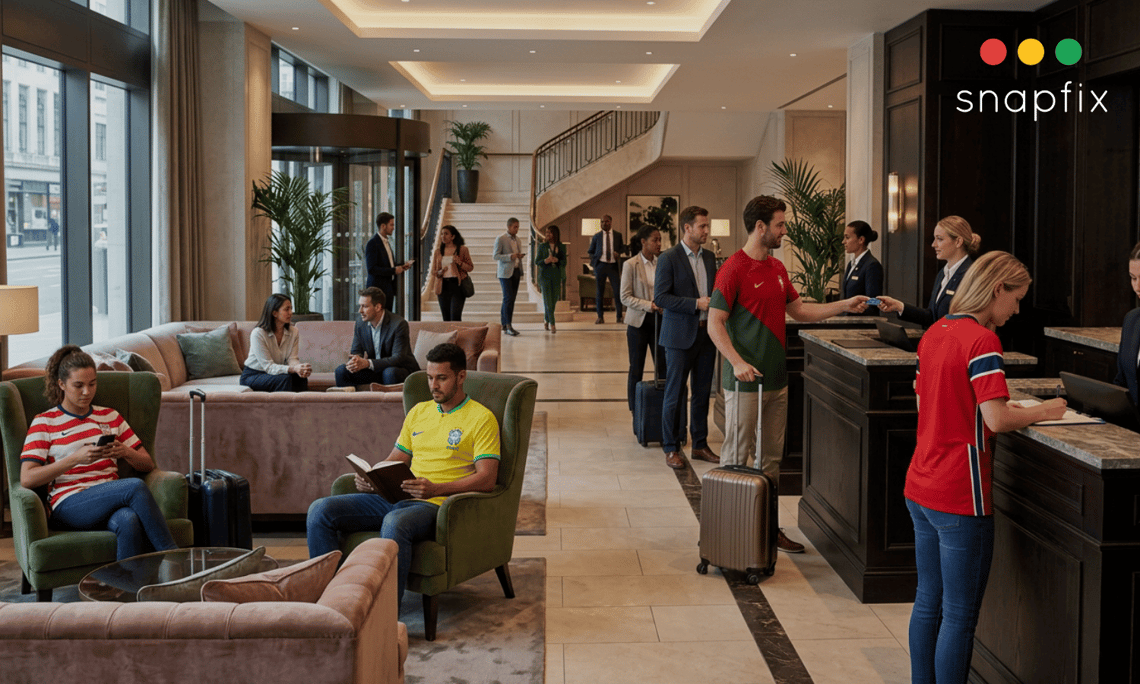
Ask any hotel operations manager who has worked through a major event period in their city and they'll tell you the same thing: it's not the volume that gets you. It's everything happening at once.
A lobby full of guests checking in from three different time zones. A housekeeper who spotted a fault in room 412 but didn't have time to log it properly. A guest message about extra towels sitting in the front desk inbox while the team is managing a queue. A new team member on their third consecutive busy day, doing their best but working from memory.
The FIFA World Cup 2026 runs from June 11 to July 19 across 16 host cities in the United States, Canada, and Mexico, with 104 matches and an estimated 5 million attendees. For hotels in those cities, this is one of the biggest operating windows of the year. The guests arriving for it are travelling internationally, often for the first time in your city, with high expectations and a very high likelihood of leaving a review when they get home.
Getting the guest experience right during a period like this doesn't come down to how hard your team works. It comes down to how well information moves across your operation when everything is happening at the same time. This guide breaks down where hotels typically lose control during major event periods, and what it looks like when the operation is actually set up to handle it.
What Actually Goes Wrong During a Major Hotel Event Period
Major events don't create operational problems. They expose the ones that were already there.
The systems that hold at half capacity quietly stop working when every room is occupied, every department is stretched, and there's no slack left in the day to catch things before a guest does. Here's where it typically breaks down:
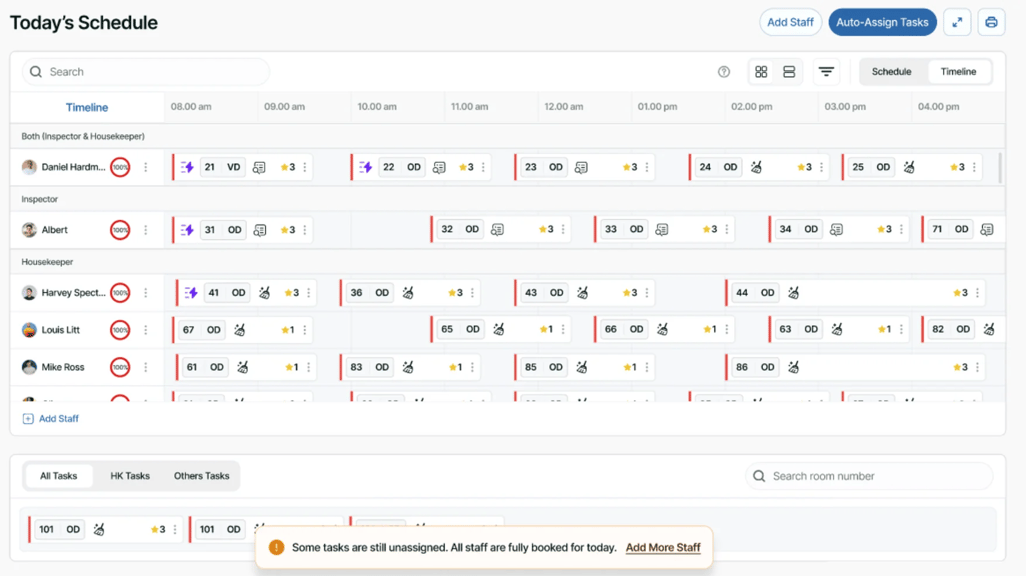
Housekeeping coordination: The room board gets printed at the start of the shift and is out of date within the hour. Late checkouts, maintenance holds, and VIP early arrivals are being communicated by radio call or group chat, and the right attendant is often the last to know. Supervisors are walking floors to find out what's actually clean instead of managing quality.
Maintenance reporting: Faults get spotted mid-shift but don't get logged because there's no time to stop and fill in a form. Issues travel by verbal handoff, each one a point where information can get lost or delayed. Engineers are arriving at jobs without context, or not arriving at all because nobody confirmed the task was actually assigned.
Guest communication: Requests come in across multiple channels at once: calls, messages, walk-ups. Every one that lands at the front desk becomes a manual relay task during the busiest part of the shift. Things get missed, guests follow up, and the team catches up, but the experience has already been shaped.
Team consistency: Bigger teams during event periods mean more variation in how tasks get done. Without a shared standard everyone is working from, quality depends on individual experience levels. The things that quietly slip accumulate in review scores over the weeks that follow.
None of these are failures of effort. They're failures of coordination. And every one of them shows up in guest reviews before they show up in your operational reports.
How the Right Setup Keeps Your Hotel Running at Pace
The common thread running through every breakdown above is the same thing: information not reaching the right person, in the right form, at the right time.
That's the problem Snapfix is built to fix.
The platform connects housekeeping, maintenance, guest communications, and planned works in one place, so every part of your operation is working from the same live picture of the property, not chasing updates across radio calls, printed lists, and verbal handoffs.
Here's what that looks like across the pressure points that matter most.
Real-Time Housekeeping Management with Snapfix Rooms
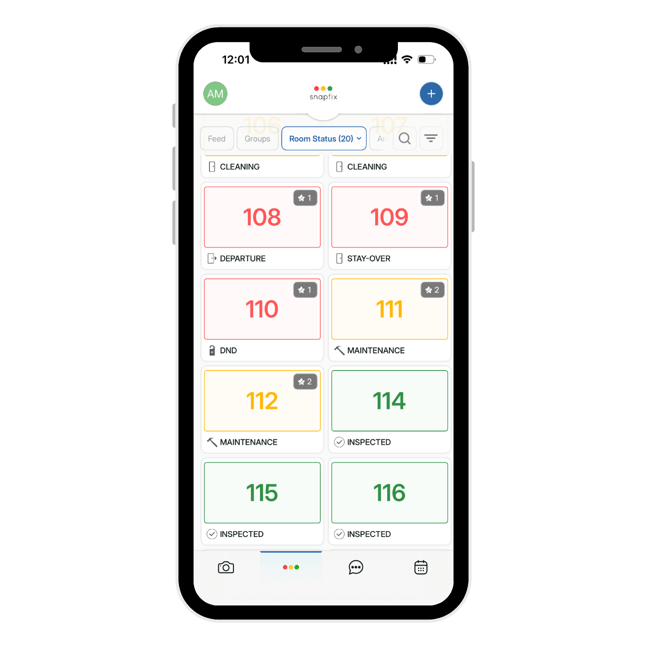
The challenge with housekeeping during a busy event period isn't the cleaning standard. It's that the information driving decisions goes out of date faster than it can be communicated manually.
Snapfix Rooms keeps the whole team on the same live picture of the property, updated automatically as things change. When a DND clears, a maintenance hold is released, or a VIP moves their arrival forward, the right attendant knows about it without a radio call or a supervisor walk-around:
- Attendants always know which room to prioritise next
- Supervisors can see the status of every room across every floor from one screen
- The front desk is working from real-time readiness information, not estimates
- Room turnarounds happen faster because the right information reaches the right person straight away
AI-Powered Maintenance Reporting
Housekeepers spot faults. That's not the problem. The problem is what happens between spotting one and it reaching the right staff, especially when there are fifteen more rooms to turn and stopping to fill in a form is the last thing anyone has time for.
With Snapfix, a team member takes a photo on their mobile. Snapfix does the rest:
- Reads the image and identifies what the issue is
- Generates an accurate task, categorised and assigned to the right staff
- Sends an instant mobile notification with the photo and room number attached
- All without the team member stopping to type a word
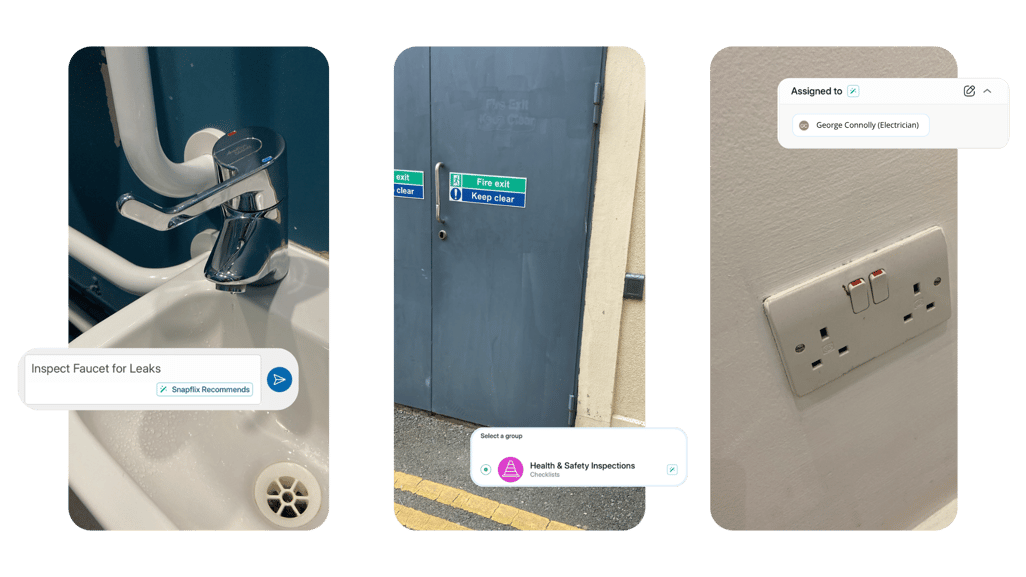
A fault spotted at 10am reaches an engineer at 10am. It works across multilingual teams with no training required, and every issue is logged, tracked, and visible to management. Nothing exists only in someone's memory.
Guest Communication That Goes Directly to the Right Team
Every guest request during a major event period is a small coordination task. Extra towels, a late checkout, a fault reported from inside the room. Individually, easy. Collectively, a significant load on the front desk during exactly the point in the day when they're already stretched.
Snapfix Guest Comms removes the relay. Guest messages convert automatically into operational tasks, assigned to the right team with full context:
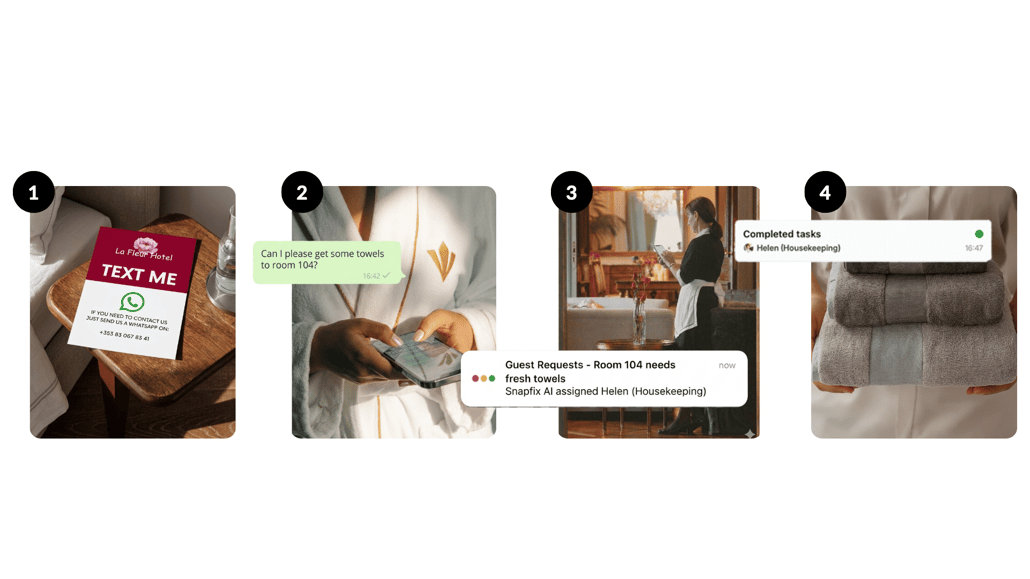
- Requests go directly to housekeeping, maintenance, or the relevant department, no phone calls between teams
- Every request is tracked through to completion, nothing gets lost between shifts
- Response times come down because the right person gets the task immediately
- Front desk staff are free to focus on the guests standing in front of them
Consistent Standards with AI-Generated Hotel Checklists
During a major event window, the whole team is moving fast. Shifts are longer, there's less time for quality checks, and the standard can quietly slip without anyone meaning it to. It's not always about new starters. It's about what happens to the whole team when the pace is high enough for long enough.
Snapfix's AI-generated checklists, built from operational data across thousands of hotel properties, give everyone the same clear standard to work from regardless of how busy the day is:
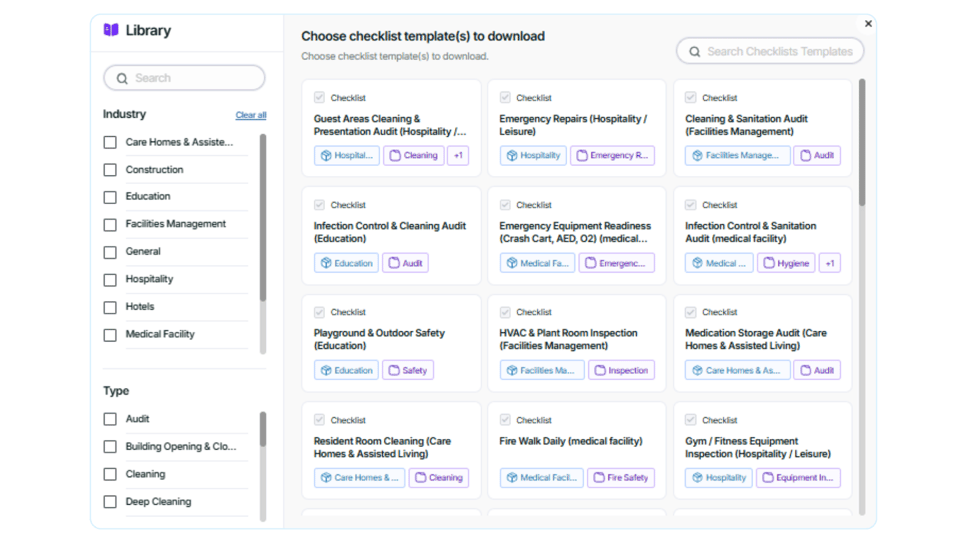
- Every task is completed to the same standard, across every shift, every team member
- Supervisors can verify compliance through the platform without physically checking every room
- When the pressure is highest, the operation holds its standard instead of quietly eroding it
Pre-Event Planned Maintenance for Hotels
The weeks before a major event are the right time to confirm every critical asset is in working order. HVAC, lifts, kitchen equipment, fire safety systems: a failure during a high-footfall period is harder to manage and more expensive to recover from than the same fault on a quiet week.
Snapfix Plan lets you schedule and track preventive maintenance across the property, with full visibility into what's due, what's done, and what's still outstanding.
Snapfix Track gives you asset-level oversight so nothing gets missed in the run-up. With IoT integrations, Snapfix can receive signals from connected systems and create maintenance tasks automatically before a fault reaches a guest at all.
What Your Operation Should Look Like Before the First Arrival Wave
The hotels that come through a major event period well are the ones that sorted their operations setup before the pressure arrived, not during it. In practice, that means:
- Housekeeping running on live room status
- Maintenance faults being reported and routed in seconds
- Guest requests reaching the right team directly, without a front desk relay
- Every team member working from a consistent standard, across every shift
- Planned maintenance completed and every critical asset signed off before peak period begins
The FIFA World Cup 2026 is already underway, and the hotels that will come out of this period with strong guest scores are the ones that have their operation running on live information, not printed room lists and radio calls.
If your housekeeping, maintenance, and guest communication setup isn't where it needs to be, there's still time to change that.
See how Snapfix's hotel housekeeping software gives your team real-time room visibility, AI-powered task management, and guest communication that reaches the right person without a front desk relay.
Book a demo or start a free trial and get your operation set up before the next arrival wave hits.
Frequently Asked Questions: Hotel Maintenance for Major Events
1. How should hotels prepare operations for a major sporting event?
Start with the coordination points that break down fastest under pressure: room management, maintenance reporting, and guest communication. Hotels that handle busy periods well are the ones where every department is working from accurate, live information, not a plan that was accurate at the start of the morning.
2. What is the best hotel operations software for managing a major event period?
The most useful platform during a high-demand period connects housekeeping, maintenance, and guest communications in one place with live updates. Snapfix covers all three: real-time room management via Rooms, AI-powered task creation via Fix, planned maintenance via Plan, and guest messaging that converts directly into operational tasks without a front desk relay.
3. How can hotels improve housekeeping turnaround times during a busy event period?
The biggest gains come from giving the housekeeping team live information rather than a static plan. A room management system that updates automatically when checkouts come in, DNDs clear, or maintenance holds are released removes the dependency on radio calls and supervisor walk-arounds, and gets rooms back into circulation faster.
4. How does AI improve hotel maintenance reporting during peak periods?
When a team member can log a fault by taking a photo and the system handles categorisation, assignment, and notification automatically, the gap between spotting a problem and getting it to the right engineer closes significantly. During a major event period, that speed is the difference between a fault resolved before arrival and one that becomes a guest complaint.
5. What are the biggest hotel operations risks during the FIFA World Cup 2026?
The biggest risk is the coordination gaps that volume exposes: maintenance faults that go unreported, guest requests that get missed, room turnarounds that slow down because the housekeeping team is working from outdated information. Hotels with connected, live operations systems are significantly better placed to keep those gaps from opening in the first place.