


Every hotel manager knows that sinking feeling when an inspector highlights something you've missed. But here's what keeps experienced hoteliers up at night: it's rarely the obvious issues that cause problems. It's the compliance gaps hiding in plain sight, the ones you only discover when it's too late, and the fines are already being calculated.
As we move into 2026, UK hotels face an increasingly complex regulatory landscape. From updated fire safety requirements to evolving food hygiene standards, the cost of compliance oversights has never been higher. The good news? Most of these gaps are entirely preventable when you know where to look.
Let's explore the seven most common compliance blind spots that catch UK hotels off guard, and more importantly, how to close them before they become expensive problems.
1. Incomplete Fire Safety Documentation Under the Fire Safety (England) Regulations 2022
The Fire Safety (England) Regulations 2022 introduced significant changes that many hotels are still struggling to implement fully. The regulations don't just require a fire risk assessment–they demand comprehensive documentation of fire doors, evacuation procedures, and regular checks.
The compliance gap: Hotels often have the assessments but lack the detailed logs proving ongoing compliance. Fire door checks, emergency lighting tests, and evacuation drill records frequently exist on scattered spreadsheets or paper forms that go missing when you need them most.
How to fix it in Q1:
- Conduct a comprehensive fire door audit: Check every fire door across your property for proper closure, intact seals, and functioning self-closers. Document the condition with photos and schedule repairs for any deficiencies
- Centralise all fire safety records digitally: Create one system where every inspection, emergency lighting test, and staff training session is logged with photo evidence and timestamps
- Update your Fire Emergency Evacuation Plan (FEEP): Ensure evacuation routes reflect any recent layout changes and verify that floor plans displayed in guest rooms are current
- Make inspections mobile-friendly: Your team should complete checks directly on their phones, automatically creating auditable records they can't lose or forget
- Set up automatic reminders: Schedule recurring tasks for monthly checks, quarterly drills, and annual assessments so nothing slips through the cracks
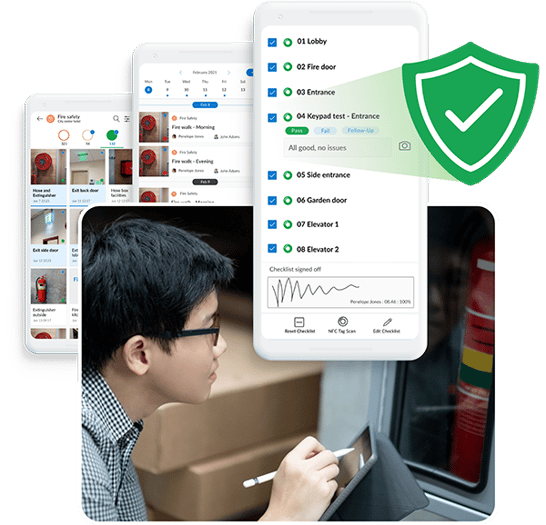
This is where a maintenance management platform becomes essential. Instead of relying on memory or hoping everyone follows the checklist, teams can work from standardised digital templates that create compliance trails automatically.
2. Gas Safety Certificate Gaps Across Multiple Properties
For hotels with multiple properties or complex gas installations, keeping track of annual Gas Safety (Installation and Use) Regulations 1998 requirements becomes a logistical nightmare. Miss one boiler's annual check, and you're not just non-compliant, you're potentially putting guests and staff at risk.
The compliance gap: Hotels typically know about their main boilers but overlook secondary gas appliances in kitchens, staff areas, or pool facilities. Calendar reminders get ignored during busy periods, and renewals slip through the cracks.
How to fix it in Q1:
Conduct a complete audit of every gas appliance across your property.
Create a master schedule with alerts set 30, 14, and 7 days before each certificate expires. Better yet, link these deadlines to your maintenance workflow so the responsible person receives automatic reminders they can't dismiss without action.
A proactive approach means scheduling your Gas Safe engineer visits well in advance and tracking them in a system that won't let certificates lapse silently.
The moment an inspection is due, the right team member should be notified automatically, with the ability to raise a job, assign it, and track completion–all in one place.
3. Legionella Risk Assessment Failures
Legionella control is governed by the Health and Safety at Work Act 1974 and the Control of Substances Hazardous to Health Regulations 2002 (COSHH). Yet it remains one of the most commonly overlooked compliance areas in UK hospitality.
The compliance gap: Many hotels have an initial risk assessment but fail to maintain the required monthly temperature checks, quarterly tank inspections, or annual reviews. Shower heads in rarely used rooms, little-used outlets, and complex water systems create perfect breeding grounds for Legionella bacteria.
How to fix it in Q1:
- Map every water outlet in your property: Create a comprehensive list of all taps, showers, and water points, categorised by usage frequency
- Build usage-based maintenance schedules: High-risk areas like occasionally vacant guest rooms need weekly flushing; create automated schedules that match the risk level
- Log temperatures consistently: Use digital checklists to record water temperatures with photo evidence, ensuring your team follows the same process every time
- Create an unbreakable audit trail: Document which outlets were tested, when, by whom, and what the readings were–making compliance verification effortless
Digital checklists ensure consistency. When your maintenance team performs legionella checks, they should be working from the same template every time, with photo evidence of temperature readings and clear records of which outlets were tested. This creates an audit trail that proves compliance–not just claims it.
4. GDPR Compliance in Guest Data Management
Hotels collect enormous amounts of personal data–names, addresses, payment details, special requirements, CCTV footage. Yet many still haven't fully implemented the UK GDPR requirements that have been in force since 2018.
The compliance gap: The issue isn't usually the booking system–it's everything else. Guest complaints logged in emails, maintenance requests mentioning room numbers and guest names, staff WhatsApp groups discussing guest issues, and incident reports stored insecurely all create data protection vulnerabilities.
How to fix it in Q1:
- Review every system where guest data is stored or transmitted.
- Create clear data retention policies and ensure your team knows how long to keep different types of records.
- Move away from informal communication channels for anything involving guest information.
When a guest reports a maintenance issue, that request should flow through a secure system that logs the issue without exposing unnecessary personal data to your entire team. Your maintenance staff needs to know "Room 305 has a leaking tap"–they don't need the guest's name, email, or booking details.
5. Electrical Installation Condition Report (EICR) Oversights
Every hotel must have an Electrical Installation Condition Report (EICR) conducted at least every five years, with portable appliance testing (PAT) for movable equipment. This seems straightforward until you consider the sheer number of electrical items in a typical hotel.
The compliance gap: Hotels get the main EICR done but lose track of individual PAT testing for items like kettles, hairdryers, irons, lamps, and equipment in staff areas. When items are replaced, they enter service without proper testing. When items move between rooms, the testing records don't follow them.
How to fix it in Q1:
- Create a complete electrical safety inventory listing fixed installations, portable appliances, emergency lighting, and the responsible person for each item
- Assign testing frequencies based on HSE guidance (typically every 5 years for fixed installations, annually for portable appliances in hotels)
- Schedule reminders to book tests, not just the tests themselves–most compliance failures happen because hotels genuinely forget what's due when
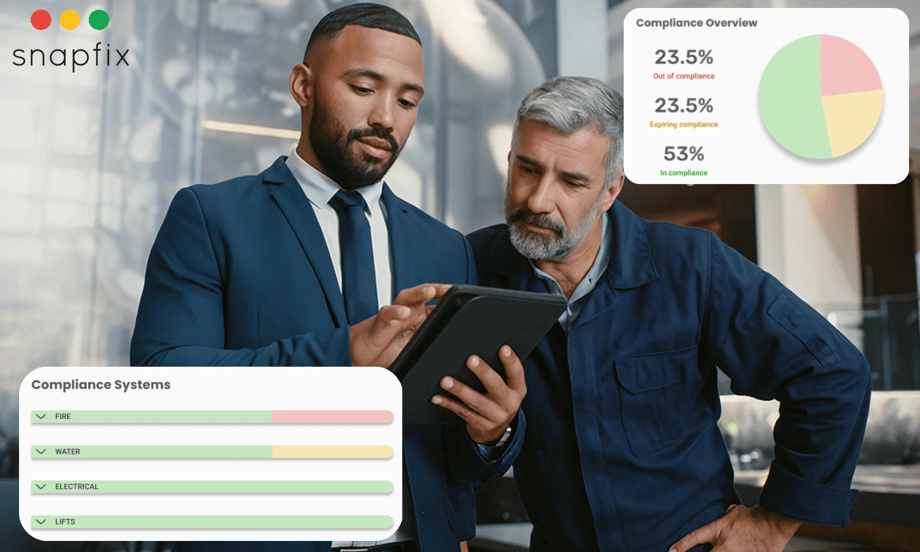
- Centralize all electrical certificates in one accessible location so you're not hunting through filing cabinets during an inspection
6. Food Hygiene and Allergen Information Gaps
The Food Information Regulations 2014 require hotels to provide clear allergen information, while the Food Safety Act 1990 and related regulations set hygiene standards. Yet compliance gaps frequently appear during staff transitions and menu changes.
The compliance gap: Hotels often have excellent systems in their main kitchen but inconsistencies emerge in breakfast service, room service, bar operations, or when temporary staff cover shifts. Allergen information gets outdated when suppliers change, and cleaning schedules slip when the team is short-staffed.
How to fix it in Q1:
- Standardise your food safety checks across all service points.
- Every refrigerator should have the same temperature logging system.
- Every food prep area should follow the same cleaning checklist.
- Every staff member should have access to current allergen information.
- Move from paper-based systems to digital logs that can't be backdated or "completed" after the fact.
When your breakfast supervisor records fridge temperatures, that entry should be timestamped and include photo evidence. When deep cleaning is scheduled, it should appear on the same maintenance schedule as your boiler servicing–making it impossible to overlook.
7. Health and Safety Policy and Risk Assessment Updates
The Health and Safety at Work Act 1974 requires employers to have a written health and safety policy if they employ five or more people. Yet many hotels are working from outdated policies that don't reflect current operations.
The compliance gap: Hotels write comprehensive policies during setup or refurbishment, then never update them as operations evolve. New services get added, buildings get modified, equipment changes, but the risk assessments gather dust in a drawer. Staff receive initial training but refreshers are inconsistent.
How to fix it in Q1:
Schedule a complete review of your health and safety documentation. Has anything changed in your operations since your last review? New pool facilities, renovated kitchens, additional storage areas, or changed working practices all require updated risk assessments.
Create a schedule for regular policy reviews- quarterly for high-risk areas, annually for everything else. Link these reviews to real operational changes by connecting them to your maintenance and project management workflows. When you complete a refurbishment project, the final step should include updating relevant risk assessments.
How Snapfix Helps Close Compliance Gaps Before They Cost You
Here's the reality: compliance isn't complicated, it's just consistent. The hotels that avoid costly oversights aren't necessarily doing anything revolutionary; they're simply making it impossible to forget, ignore, or lose track of essential tasks.
That's exactly what Snapfix is built for.
Snapfix transforms compliance from a paperwork burden into an automated workflow. Instead of managing fire safety checks on one spreadsheet, gas certificates in another system, and legionella logs on clipboards, everything lives in one place. Your team completes checks on their phones, photo evidence uploads automatically, and you have instant proof of compliance whenever you need it.
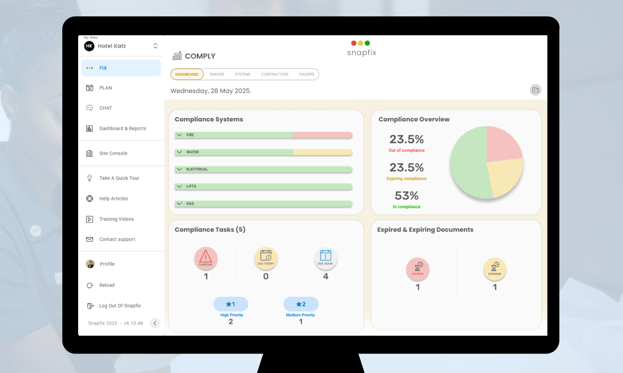
Scheduled maintenance becomes automatic. Gas safety certificates due in 30 days? The system alerts the responsible person. Fire door checks overdue? You'll know immediately. No more surprise lapses.
Evidence is built-in, not bolted on. When your team completes a temperature check, takes a photo of a PAT test sticker, or logs a safety inspection, it's timestamped and stored forever. When an inspector asks questions, you have answers–with proof.
Accountability is clear. Every task has an owner. Every inspection has a completion record. Every compliance requirement has a schedule. Nothing falls through the cracks because someone "forgot to mention it" during a handover.
UK hotels using Snapfix have:
- Cut time spent on compliance documentation by over 60%
- Created bulletproof audit trails that satisfy even the toughest inspectors
- Caught and fixed maintenance issues before they became guest complaints or safety hazards
Book a free demo or start your 14-day free trial and stay ahead of regulations with automated maintenance scheduling, digital inspection logs, and complete compliance visibility.