

Fire safety regulations in the UK are well-defined. The Regulatory Reform (Fire Safety) Order 2005 has been the cornerstone of fire safety law for nearly two decades. Most hotel managers genuinely believe they're compliant with its requirements.
But there's a critical gap: being compliant and proving compliance are two entirely different things.
The real risk surfaces during inspections, incidents, or audits. When a fire inspector walks through your doors, the question isn't "Do you have fire extinguishers?" It's "Can you prove they were checked last month? And the month before that?"
Compliance isn't about being safe – it's about being able to demonstrate it, consistently and comprehensively.
What UK Fire Safety Compliance Actually Requires from Hotels
The Regulatory Reform (Fire Safety) Order 2005 remains the primary legislation for all non-domestic premises in England and Wales. Under this Order, the "responsible person" (typically the hotel owner, manager, or operator) must:
- Carry out and regularly review a fire risk assessment
- Implement appropriate fire safety measures based on that assessment
- Ensure adequate means of escape are maintained
- Provide and maintain fire detection and warning systems
- Maintain fire-fighting equipment and emergency lighting
- Provide fire safety information and training to staff
- Keep detailed records of all fire safety measures and checks
The Fire Safety (England) Regulations 2022, which came into force in January 2023, introduced significant new documentation requirements for buildings containing two or more sets of domestic premises, which includes most hotels with guest accommodation.
These regulations require:
- A more detailed fire risk assessment is documented in a specific format
- Clear identification of the responsible person
- Information sharing with residents (in hotels, this primarily affects longer-term guests and staff accommodation)
- For taller buildings (over 11 metres or at least five storeys), additional requirements including floor plans, building construction details, and external wall systems documentation
While the most stringent requirements apply to higher-risk residential buildings, the baseline documentation standards affect the majority of UK hotels. Hotels should verify their specific obligations based on their building height, layout, and whether they include staff residences or mixed-use spaces.
The Compliance Gap: What Breaks Down and What Works
The gap between regulatory requirements and operational reality exists in the everyday chaos of running a hotel. Here's where traditional approaches fail and what actually works.
Why Traditional Compliance Fails
Paper logbooks create three critical vulnerabilities:
- Records disappear during reorganizations or get filed incorrectly. When inspectors ask for fire alarm test records from six months ago, "we can't find them" isn't compliance.
- No automated alerts mean missed tasks go unnoticed until it's too late. Hotels using Snapfix Comply receive automated reminders before tasks become overdue, with management escalations for incomplete items.
- No verification that checks actually happened. Paper signatures don't prove pressure gauges were read or fire alarm error codes were addressed.
The operational realities that undermine compliance:
- Knowledge gaps: Staff tick boxes without understanding what they're checking for, missing genuine safety issues.
- Inconsistency: Day shifts meticulously document while night shifts rush. Seasonal staff receive less thorough training.
- The reactive trap: Fire alarm tests postponed when reception is short-staffed. Extinguisher inspections rushed for urgent repairs. "We were too busy" isn't acceptable to inspectors.
What Actually Works
Modern fire safety compliance requires three elements:
Systematic - Tasks embedded in operational rhythms with automated scheduling, clear ownership, and real-time tracking that flags missed items.
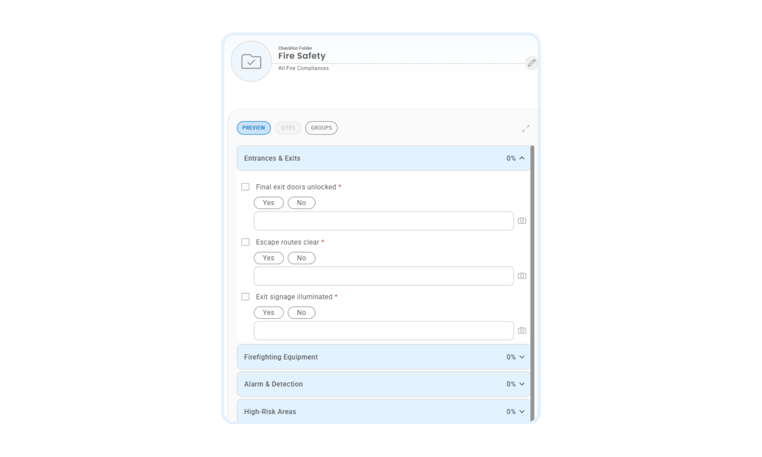
Verified - Time-stamped records, location data, photographic evidence, and digital signatures that prove work happened. Snapfix Comply captures this automatically as staff complete checks on mobile devices.
Accessible - Dashboard views for management, instant organized records for inspectors, comprehensive evidence for insurance claims.
Turning Fire Safety Compliance into a Day-to-Day Process
Making fire safety compliance seamless rather than burdensome comes down to a few key principles:
- Make your risk assessment actionable - Translate it directly into scheduled tasks, not just a filed document. If fire doors are identified as critical in your assessment, create regular inspection tasks immediately.
- Integrate checks into existing workflows - Housekeeping already walks corridors daily; add fire door checks to their route. Night porters already patrol the building; include emergency lighting verification. The most sustainable compliance programs leverage work people already do.
- Create clear ownership - Every task needs a named person, not just a department, with automated escalations when things slip through the cracks.
- Maintain equipment history digitally - Track installation dates, service dates, repairs, and contractor certificates for instant retrieval. This demonstrates compliance with manufacturer recommendations and British Standards.
- Prepare for inspections continuously - Keep a dashboard showing what's current and what needs attention, so you're always inspection-ready rather than scrambling when the inspector calls.
Closing the Compliance Gap With Snapfix Comply
The gap between fire safety requirements and operational reality doesn't close by accident. It requires systematic approaches that make compliance easy to achieve and hard to neglect.
Snapfix Comply transforms fire safety management for UK hotels by turning those principles into practice - automatically.
From scattered paperwork to complete control:
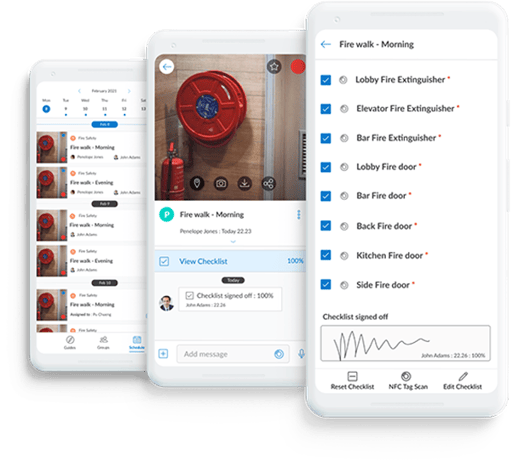
Set up your fire alarm tests, extinguisher checks, and equipment servicing once. The system handles recurring tasks automatically, with mobile-first access so maintenance teams complete checks on their phones while standing next to the equipment. Time and location verification happens automatically - no more questions about whether checks actually happened.
Always stay inspection-ready
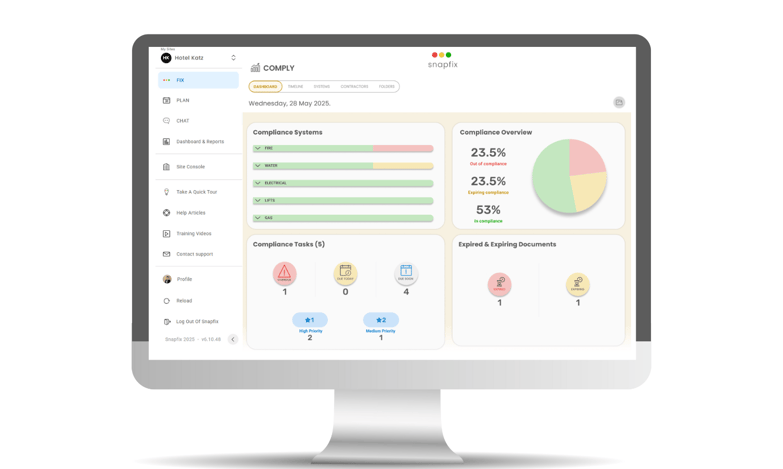
When inspectors ask about emergency lighting tests from six months ago, pull up complete records in seconds - with photos, completion times, and digital signatures. Your compliance dashboard shows at a glance what's current and what needs attention across all fire safety requirements.
Catch problems before inspectors do
Smart alerts catch issues before they become compliance failures. Automated reminders go out before tasks become overdue, with management escalations for incomplete items. You see problems coming instead of discovering them during inspections.
Rather than juggling paper logbooks and scattered spreadsheets, hotel managers gain a unified system where compliance happens where the work happens - documented, verified, and always current.
Because in the end, compliance isn't about ticking boxes. It's about creating environments where guests and staff are genuinely safe, and where you can prove it.
See how Snapfix Comply works for your hotel. Book a demo and discover how to close your compliance gap for good.
Fire Safety Regulations UK - FAQs
What are the main fire safety regulations for UK hotels?
UK hotels operate under the Regulatory Reform (Fire Safety) Order 2005, which requires comprehensive fire risk assessments, appropriate fire precautions, and documented compliance.
How often must fire risk assessments be reviewed?
Fire risk assessments should be reviewed at minimum annually and updated immediately whenever material changes occur to your building, layout, operations, or equipment.
What fire safety checks should hotels conduct monthly?
Monthly checks should cover fire alarm testing, emergency lighting functionality, fire door condition and operation, fire extinguisher presence and condition, and escape route clearance. All checks must be documented.
How long should fire safety compliance records be retained?
Best practice recommends maintaining fire safety documentation for at least five years, including inspection records, maintenance logs, training records, and fire risk assessments.
Do small hotels need written fire risk assessments?
Written fire risk assessments are legally required for premises employing five or more people. However, written documentation is best practice for all hotels regardless of size.